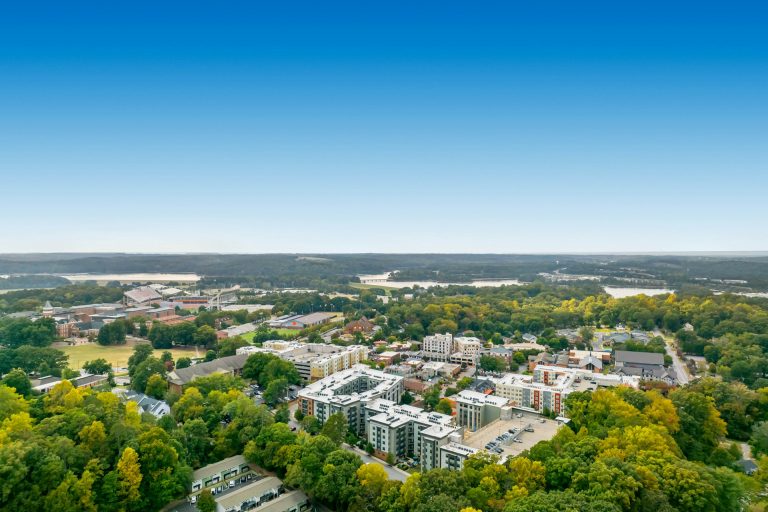
Best Neighborhoods in Orlando for Families: Compare Your Priorities
Your job offer says Orlando. Your kids’ lives, though, get decided by a much smaller thing: the block you pick. One family lands near a lake and a trail system and never touches Interstate 4 (I-4) at rush hour. Another buys twenty minutes away and spends an hour in the car every weekday. Same metro. Completely different daily life.
That gap is exactly why searching for the best neighborhoods in Orlando for families rarely gives you an answer you trust. City-level numbers average together places that look nothing alike.
SettleSavvy exists for this moment in the decision: it lets you pick the factors your household actually cares about, things like school zoning, parks, commute, and housing cost, then maps every neighborhood in the Orlando metro against your list for free.
In this guide, you will discover how to define your household’s non-negotiables, how Orange, Seminole, and Osceola County school boundaries change the math, what established walkable areas near the urban core offer versus newer suburbs, and how to pressure-test a shortlist before you sign anything.
If you are moving to Central Florida with children and a real budget, this is built around your priorities, not a list someone else ranked.
Start With Your Household’s Non-Negotiables
Before you look at a single listing, write down the three things your family cannot live without. That short list does more work than any neighborhood ranking, because it turns a huge metro into a manageable set of options.
Most families relocating to Central Florida start with a general feeling: they want space, decent schools, and a reasonable drive. Those are directions, not decisions. Turning them into specifics is what makes a shortlist possible.
How to Compare the Best Neighborhoods in Orlando for Families
The useful comparison is not “which area is best” but “which trade-off can we live with.” Orlando neighborhood priorities for buyers with children usually cluster around four things: outdoor access, housing type, schools, and drive time.
Try scoring each candidate area on the same handful of factors. Give each one a rating from your own household, not from a website. When two areas tie, the tiebreaker is almost always the factor you were quietest about.
A practical starting list looks like this:
- Non-negotiable: the one thing that would make you turn down an otherwise perfect house
- Strong preference: things worth paying more for, within reason
- Nice to have: amenities you would enjoy but could drive fifteen minutes to reach
- Deal-breaker: the condition you refuse to accept, such as a commute over 40 minutes
Outdoor Space, Parks, Playgrounds, and Daily Recreation
Central Florida gives you outdoor time nearly year-round, which raises the value of parks and walking paths considerably. A neighborhood with a playground three blocks away changes how often kids actually get outside.
Look at the difference between big regional parks and small pocket parks. Regional parks are weekend destinations. Pocket parks and connected walking paths are what you use on a Tuesday after dinner. That daily use matters more for most households.
Lakes shape recreation across the metro. Some areas sit on chains of lakes with public access points; others have water views but limited entry. Ask what you can actually walk to, not what shows up on the map.
Housing Type, Budget, and Room to Grow
Housing type drives the budget more than neighborhood name does. Single-family homes, townhomes, and new construction homes exist across the metro, but the mix shifts sharply from area to area.
Older neighborhoods near the core lean toward single-family homes on smaller lots with mature trees. Newer communities farther out offer new construction homes, larger floor plans, and homeowners association fees. Home prices reflect land, age, and amenities, so compare cost per useful square foot, not just the sticker.
A first-time buyer weighs this differently than a repeat buyer. If this is your first purchase, a townhome in a walkable area may buy you a lifestyle you cannot afford in a detached house nearby. That is a real option. Not a downgrade.
Commute, Accessibility, and Everyday Errands
I-4 access shapes almost every Orlando commute conversation. The I-4 corridor runs diagonally through the metro, and living on the wrong side of it for your workplace can add serious time.
Errands matter just as much as the work commute. Count the trips you make weekly: groceries, daycare, sports practice, pediatrician. If those are all a ten-minute drive in different directions, that adds up faster than one longer commute.
Areas near International Drive and Sand Lake Road sit close to major employment and entertainment, which helps some households and frustrates others because of tourist traffic. Urban living and suburban living each carry a cost. Just measured in different currencies.
Once you know what you need, the next question is which county lines and school zones your shortlist actually falls within.
Compare School Information Before Choosing an Address
School assignment in the Orlando metro depends on your street address, not your city name. Two houses a mile apart can feed into different schools and sometimes different counties entirely.
That is why an Orlando school district comparison for movers has to start with geography, not reputation. Reputation travels by word of mouth. Boundaries are drawn on a map and updated by the district.
Orange County, Seminole County, and Osceola County Boundaries
The core of the metro sits in Orange County, served by Orange County Public Schools. To the north, Seminole County Public Schools covers communities like Lake Mary, Oviedo, and Winter Springs. To the south, Osceola County covers Kissimmee, Celebration, and much of the growth along the southern edge.
Each district runs its own enrollment rules, calendar, magnet programs, and choice options. Families sometimes assume a district works like the one they left. It usually does not.
A military family relocating on short notice feels this most. When you have weeks rather than months, knowing which county you are buying into narrows the search fast and prevents a second move later.
Why School Zones Can Change the Decision
School zoning can override neighborhood names. A well-known area may be split between multiple elementary schools, and homes on opposite sides of one road may be assigned differently.
Boundaries also change. Districts rezone when new schools open or when enrollment shifts, which happens often in fast-growing parts of the metro. A zone that holds today may not hold in three years. So ask the district about planned changes.
Some families anchor their entire search to a specific school, such as Winter Park High, Lake Nona High School, Laureate Park Elementary, or Windermere Elementary. That works, as long as you verify the current attendance zone for the exact address rather than the general area.
How to Verify School Performance and Enrollment Details
Do not rely on a single rating. School quality, school performance, and school ratings come from different sources using different formulas, and they often disagree for good reasons.
Verify these items directly before you make an offer:
- The current attendance zone for the specific address, confirmed with the district’s locator tool
- Whether the school is at capacity or using portable classrooms
- Enrollment options such as magnet, choice, or private schools if the assigned school is not the fit you want
- Feeder patterns from elementary through high school, since they can split unexpectedly
- Transportation eligibility, because bus service depends on distance and route
If you want a starting point for comparing school data across the metro, an overview of the best schools in Orlando organizes that information by area rather than by a single citywide score. For national context on how ratings are built, how school ratings work is worth a quick read before you treat any grade as final.
School zones tell you where your kids go. The neighborhood itself decides what the rest of the day feels like. That starts with how close you live to the center of things.
Established, Walkable Areas Near the Urban Core
Closer to Downtown Orlando, you trade square footage for shorter trips and older, tree-lined streets. Families who value walkable errands and community events tend to gravitate here, even when the house is smaller than what the same money buys farther out.
These areas share a pattern: mature landscaping, mixed housing stock, and small commercial districts you can reach without the highway.
Winter Park and Audubon Park for Culture, Lakes, and Local Errands
Winter Park sits north of downtown and centers on Park Avenue, a walkable stretch of restaurants and shops beside Central Park. The Chain of Lakes runs through the city, and Rollins College adds cultural programming and community events throughout the year.
Housing here skews older and pricier, with a mix of historic homes and newer infill. Families who prioritize walkability and lake access often accept a smaller lot to get it. Those who need four bedrooms and a yard sometimes find the math difficult.
Audubon Park, just south, offers a smaller-scale version. It has a compact commercial district, bungalow-style homes, and easy access to Winter Park without the same price ceiling. Both areas come up often alongside College Park and Thornton Park when people talk about walkable Orlando.
Baldwin Park and College Park for Walkability and Downtown Access
Baldwin Park is a planned redevelopment built around Lake Baldwin, with a village center, sidewalks, parks, and a mix of single-family homes and townhomes. It was designed for walking, which is unusual in Central Florida, and shows in daily life.
College Park sits west of I-4 and offers an older feel: 1920s and mid-century homes, a main street of local restaurants, and a short drive to downtown. Lots are modest. Inventory moves fast.
Both areas suit a remote worker with kids differently than a downtown commuter. If your office is your spare bedroom, you are buying proximity to coffee shops, parks, and after-school activities rather than proximity to a parking garage.
Downtown Orlando and Nearby Neighborhoods for an Urban Routine
Downtown Orlando and the neighborhoods around it (Thornton Park, South Eola, Delaney Park, Lawsona/Fern Creek, Lancaster Park, Colonialtown North, North Quarter, Lake Como, Spring Lake) put you inside the city’s daily rhythm. Lake Eola anchors the area with a weekly farmers’ market and regular community events.
Housing ranges from condos and historic bungalows to larger homes in Delaney Park and Lancaster Park. Families here usually accept less private yard space in exchange for parks, restaurants, and a short trip to almost everything.
Maitland, north of Winter Park, offers a quieter version with more space and a strong parks system. It is a common compromise for households that like the core but need a bigger house.
If the trade-offs near the core do not fit, the newer communities farther out flip the equation entirely.
Newer Communities and Orlando Suburbs With Different Trade-Offs
The Orlando suburbs for families relocating tend to offer newer homes, planned amenities, and more space, in exchange for longer drives and homeowners association rules. Neither model is better. They serve different priorities.
Growth in the metro has been steady, and much of the newer housing stock reflects that, with a large share of relatively recent construction across the outer communities.
Lake Nona for Medical Access, New Construction, and Airport Proximity
Lake Nona sits in southeast Orange County and grew around Medical City: a cluster that includes the Veterans Affairs (VA) Medical Center and AdventHealth facilities. The USTA National Campus, Lake Nona Town Center, and Boxi Park add recreation and gathering spots.
Housing is largely new construction across neighborhoods like Laureate Park, with trails, pools, and community programming built in. Proximity to Orlando International Airport helps frequent travelers; it hurts anyone bothered by flight paths.
The trade-off is distance. Getting to Winter Park, downtown, or the west side of the metro takes real time, especially at rush hour.
Winter Garden and Horizon West for Trails and Master-Planned Living
Winter Garden pairs a historic Downtown Winter Garden district with newer growth around it. The West Orange Trail runs straight through. The Garden Theatre hosts performances and events. Nearby Oakland adds a quieter, small-town feel.
Horizon West, just south, is a set of master-planned communities with village centers, schools, and resort-style amenities. Homes are newer and often larger. The area continues to build out.
The honest trade-off: you get trails, new homes, and organized community life, plus a commute that depends heavily on where you work. Toll roads help. They also cost money every day.
Windermere, Dr. Phillips, and Bay Hill for Lake and Golf-Oriented Living
Windermere sits on the Butler Chain of Lakes and includes gated communities such as Isleworth and Keene’s Pointe. Golf courses and water access define the area. Home prices reflect that.
Dr. Phillips and Bay Hill sit nearby with a mix of established neighborhoods, restaurants along Sand Lake Road, and easy access to the theme park corridor. Housing runs from mid-range to high-end. Lots are generally larger than those near the core.
Families choosing here usually prioritize lake or golf access, larger homes, and a quieter setting over walkable errands.
Lake Mary, Oviedo, Winter Springs, and Apopka for North and East Metro Options
Lake Mary and neighboring Heathrow sit in Seminole County along the northern I-4 corridor, with corporate offices, suburban housing, and access to SunRail. Oviedo and Winter Springs sit east, closer to the University of Central Florida (UCF).
Apopka, northwest of the city, offers newer construction at generally lower price points than the closer-in suburbs. It comes with a longer drive to downtown.
Here is how these northern and eastern options usually get weighed:
- Lake Mary and Heathrow: strong I-4 access north, SunRail station, office employment nearby
- Oviedo and Winter Springs: parks, trails, proximity to UCF, quieter residential feel
- Apopka: more house for the money, longer commutes to the south and east sides
- All four: Seminole County school district rules if you land north of the Orange County line
Celebration and Avalon Park for Planned Community Convenience
Celebration, in Osceola County, was designed as a walkable town with a compact center along Front Street, sidewalks, parks, and regular events. It is one of the few places in the metro where daily errands on foot are realistic.
Avalon Park, in East Orange County, follows a similar idea at a different price point, with a town center, schools inside the community, and a heavy trail network.
Both come with strong homeowners association governance and design standards. Some families love the consistency. Others find it restrictive. That reaction is worth testing before you commit.
Once you have four or five areas on your list, the work shifts from research to verification.
Turn Your Shortlist Into a Confident Move
A shortlist is a hypothesis. The point now is to test it against your real week, not your imagined one.
Most regret comes from skipping this step. Families tour houses carefully and neighborhoods casually. Then they lived in the neighborhood for a decade.
Check the Commute at the Times You Will Actually Travel
Drive the route on a weekday morning at rush hour, not on a Saturday afternoon. The I-4 corridor behaves completely differently depending on direction and hour.
Test the school run too, since it often runs opposite your work commute. Then test the return trip at 5:30 p.m. Three drives will tell you more than any commute estimate.
Also, check the small trips. Grocery store, urgent care, gas station. Those are the routes you take most.
Visit for the Routines You Will Have After Moving
Walk the block in the evening. Notice sidewalks, lighting, traffic speed, and whether kids are outside. Then visit a nearby park and see whether it is maintained and used.
Check the things specific to Central Florida: flood zone status, drainage after a storm, tree cover, and how the street handles heavy summer rain. Ask a neighbor what surprised them in their first year.
A retiree helping adult children shop, or moving nearby themselves, weighs this list differently: shade, sidewalk quality, and distance to healthcare rise to the top. School zoning drops off entirely.
Before your visit, it helps to have a written plan. Our guide on how to research a neighborhood covers what to look for beyond the house itself.
Build a Personalized Neighborhood Comparison Map
Holding six areas and eight priorities in your head does not work. Putting them side by side does.
A comparison map lets you weight what matters to your household: parks and recreation, school zoning, commute, housing type, and community events. Then see how each candidate area scores against your own list rather than a generic one. You can explore neighborhoods by your priorities for free and adjust the weights as your thinking changes.
If safety is high on your list, pair that with a look at how safe neighborhoods in Orlando are measured. Crime scores are modeled estimates,s and boundaries vary by source. Reading the crime mapping methodology first will keep you from over-trusting a single number.
With the shortlist tested, most families find the remaining questions are practical ones.
Frequently Asked Questions
Which Orlando neighborhoods are safest for families with children?
Safety varies block by block. Most public crime scores are modeled estimates rather than exact counts. Compare several sources, look at the specific boundaries each one uses, and pair that data with an in-person evening visit. Traffic speed and sidewalk quality often matter as much to families as reported crime.
How do Lake Nona, Baldwin Park, Winter Park, and College Park compare for family living?
Lake Nona offers new construction, planned amenities, and medical access, with longer drives to the north and west sides. Baldwin Park and College Park trade lot size for walkability and downtown proximity. Winter Park adds lakes, Park Avenue, and cultural programming at a higher price point.
Where can families find highly rated schools in the Orlando area?
Strong schools exist in Orange, Seminole, and Osceola counties, but assignment depends on your exact address. Verify the current attendance zone with the district before making an offer. Check whether the school is near capacity. Ratings from different providers use different formulas, so read more than one.
Which areas offer the best balance of home prices, commute times, and family-friendly amenities?
That balance depends entirely on where you work and what you refuse to give up. Newer suburbs generally offer more space and amenities per dollar with longer commutes. Established areas near the core cost more per square foot but shorten daily trips.
What parts of Orlando should families research carefully before buying a home?
Research flood zone status, drainage, and homeowners association rules anywhere in the metro, since all three vary widely. Also, to check planned development nearby. Fast-growing areas can change traffic patterns and school zones within a few years. Ask the district about upcoming rezoning.
Which Orlando neighborhoods have parks, walkable streets, and activities for kids?
Baldwin Park, Celebration, Avalon Park, and Downtown Winter Garden were designed with sidewalks and town centers. Winter Park, College Park, and Audubon Park offer walkable commercial strips plus nearby parks. Horizon West and Lake Nona lean on trails and community amenities rather than traditional main streets.
Your Orlando Shortlist Is Really a Priorities List
The best neighborhoods in Orlando for families are not the ones that top a list. They are the ones that match the three or four things your household refuses to compromise on, whether that is a short drive on the I-4 corridor, a park you can walk to, a specific school zone, or a house with room for everyone.
Every area in this guide wins on something and loses on something else. Lake Nona and Medical City give you new construction and medical access at the cost of distance. Winter Park and College Park give you walkability at the cost of square footage. Horizon West and Downtown Winter Garden give you trails and planned amenities at the cost of a longer commute. None of that is a flaw. It is just a trade-off you get to choose.
You have done the research. Now see how your actual priorities stack up across every neighborhood in the Orlando metro at once. Build your free SettleSavvy map, or book a call with a Savvy Consultant and talk through the trade-offs with someone who does this every day.