Best Neighborhoods in Sarasota for Retirees: Choose by Your Priorities
You have decided on Sarasota. The Gulf Coast weather, the beaches, the arts scene: that part of the retirement move feels settled. What is not settled is the harder question sitting underneath it. Do you want to walk to dinner, or drive to a quiet cul-de-sac? Do you want a condo with someone else handling the roof, or a yard you can garden in?
The search for the best neighborhoods in Sarasota for retirees usually starts as a list and ends as a set of trade-offs. That tension is real, and it is why two retirees can look at the same Sarasota neighborhood and reach opposite conclusions.
One person values a five-minute drive to Sarasota Memorial Hospital above almost everything else. Another cares more about a private dock and a water view. Neither is wrong. The problem with most “best places” lists is that they assume one generic retiree with one generic set of needs, then hand everyone the same answer.
In this guide, you will discover how to define your own retirement lifestyle first, how Sarasota neighborhoods differ by priority rather than rank, what trade-offs to weigh around cost, upkeep, and traffic, and how to test daily life before you commit.
If you are a retiree or pre-retiree comparing housing costs, walkability, healthcare proximity, and pace of life, this article is built around your priorities, not a countdown someone else wrote.
Start With the Retirement Lifestyle You Want
Before you compare neighborhoods, decide what your typical Tuesday should look like. That single exercise filters more of Sarasota than any ranking will. A retirement lifestyle is not one thing. Some households want a calendar full of tennis, pickleball, volunteer shifts, and season tickets. Others want quiet mornings, a short walk to coffee, and no HOA telling them what color to paint the door.
Write down five things you want to do most weeks. Then ask which ones require you to live near something specific: a hospital, a trail, a theater, a grandchild, a golf course. Those are your anchors. Everything else is flexible.
Prioritizing Healthcare Access, Transportation, and Daily Convenience
Healthcare access is the priority most retirees underestimate at first and rank highest within two years. It is worth mapping early.
Sarasota Memorial Health Care System operates the main hospital campus near downtown, along with additional locations across the county. Where you live changes how long that drive takes. More importantly, it affects how long it takes to get a specialist appointment across town during season.
Transportation matters too, and not only for the day you stop driving. Sarasota County Area Transit runs fixed routes plus paratransit service. The county has invested heavily in age-friendly infrastructure. According to an age-friendly community profile, the county moved its entire bus fleet to low-floor vehicles and provides thousands of paratransit trips each month.
Ask these questions about any address you are considering:
- How long is the drive to the nearest emergency room at 10 a.m. in February?
- Is there a fixed bus route within a comfortable walk, or only paratransit?
- Can you reach a grocery store, pharmacy, and bank without crossing a major arterial road?
- If one spouse stops driving, does the other absorb every errand?
Balancing Housing Costs, HOA Fees, and Maintenance Responsibilities
Purchase price is the number people compare. Monthly carrying cost is the number that decides whether the move works.
In Sarasota, that monthly figure often includes a homeowners association (HOA) fee, and those fees vary enormously depending on what they cover. A maintenance-free villa community may bundle lawn care, exterior paint, roof reserves, and a pool. A single-family home on a quarter acre hands all of that back to you, along with the freedom to skip it.
Florida coastal ownership also carries insurance and flood considerations that shift by property, elevation, and construction. Do not estimate these from a city average. Get quotes tied to the actual address before you fall in love with it.
A useful way to compare two homes fairly is to total everything you will pay each month: mortgage or nothing, taxes, insurance, HOA, and a realistic reserve for repairs. Two homes with the same list price can differ by hundreds of dollars once you do that math.
Choosing Between Walkability, Beach Access, and a Quieter Pace
These three rarely arrive in the same package. Pretending otherwise is how people end up disappointed.
Walkability in Sarasota concentrates near downtown and a handful of village-style pockets. Beach access concentrates on the barrier islands. A quieter, lower-traffic pace tends to sit inland or south, away from both.
Here is where mover profile changes the math. A retiree weighs walkability as a long-term independence question: can I still get a coffee and a prescription if I give up the car at 82? A remote worker looking at the same block weighs it as a lunch-break and coworking question, and will happily trade it for square footage and a home office.
That difference in time horizon is why a retiree should test a neighborhood not just for today, but for the version of daily life ten years out. This brings up the obvious next question: what do Sarasota’s actual neighborhoods offer once you know your priorities?
How “Best Neighborhoods in Sarasota for Retirees” Changes by Priority
There is no single answer to this question. The answer flips depending on which factor you refuse to compromise on. What follows is a comparison of what different Sarasota areas tend to offer, not a ranking.
Sarasota is a small city inside a much larger county. The city limits hold downtown, the Rosemary District, and several established residential areas. The county stretches from Longboat Key south past Venice to North Port. The character changes considerably along the way.
Coastal Living and Waterfront Access: Siesta Key, Longboat Key, Lido Key, and Bird Key
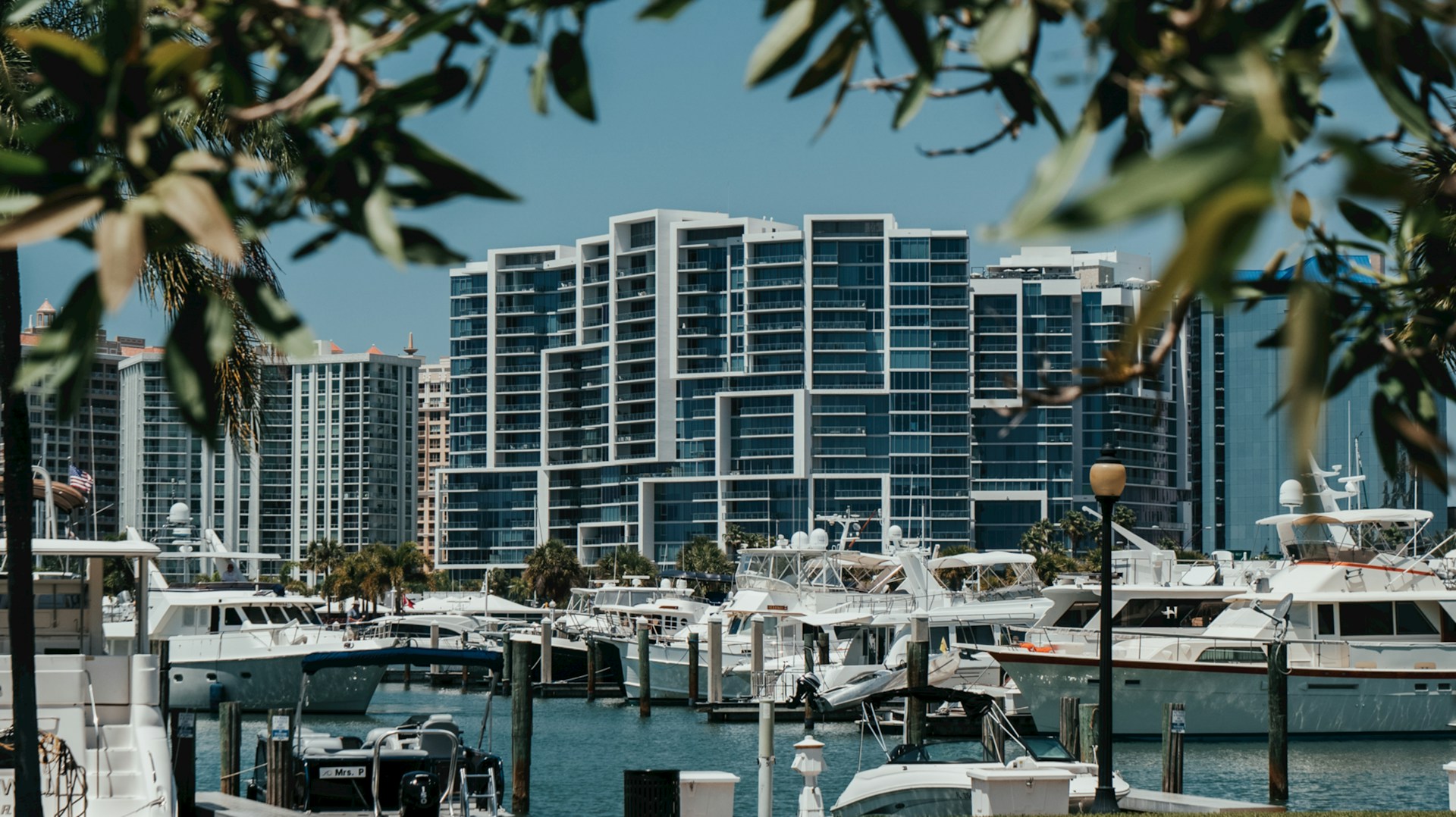
The barrier islands deliver the postcard version of Sarasota retirement: sand, water views, and boat access. They also carry the highest costs and the most seasonal congestion.
Siesta Key is best known for Siesta Key Beach and its quartz sand. It draws heavy visitor traffic, and short-term rentals are part of the housing mix in some pockets. That energy appeals to some retirees and exhausts others.
Longboat Key runs long and narrow, with a heavier concentration of condominiums and a quieter, more residential feel than Siesta. Lido Key sits closer to St. Armands Circle and downtown, which shortens the drive to the mainland. Bird Key is a smaller, gated single-family island community near the bridge with private docks on many lots.
The shared trade-off across all four is bridge access. Every trip to a doctor, hardware store, or airport crosses water. In season, that crossing takes longer than the map suggests.
Walkable Culture and Everyday Amenities: Downtown Sarasota and the Rosemary District
If walkability sits at the top of your list, downtown Sarasota and the adjacent Rosemary District are where the density actually exists.
Downtown puts restaurants, shops, the bayfront, and cultural venues within walking distance of many condominium buildings. For a retiree planning around eventual non-driving, that concentration is genuinely valuable, not just pleasant.
The Rosemary District sits just north of downtown and has seen significant newer construction. It tends to feel more urban and less established than the historic residential streets nearby.
What you give up: yard space, quiet, and parking simplicity. Downtown also runs busier during season, with events, traffic, and noise that a suburban street will not have.
Planned Living and Lower-Upkeep Options: Lakewood Ranch, Palmer Ranch, and University Park
These master-planned areas exist largely because a lot of people want amenities without maintenance. They deliver that in exchange for distance and rules.
Lakewood Ranch spans a large area east of Interstate 75 (I-75), crossing into Manatee County. It contains many separate neighborhoods with their own HOAs, amenity packages, and price points, so “Lakewood Ranch” alone tells you very little.
Palmer Ranch sits south of Sarasota, closer to the Legacy Trail and reasonably positioned for both downtown and Venice. University Park lies northeast of University Parkway, built around a golf course and closer to the airport.
Common threads worth checking in each:
- What exactly does the HOA fee include, and what is the reserve situation?
- Are there age restrictions, and do they fit your household now and later?
- How far is the nearest urgent care and full-service hospital?
- Is the amenity center active year-round or mostly seasonal?
Established Residential Settings: The Meadows, Southgate, and Arlington Park
Some retirees do not want a brand-new build or a barrier island. They want mature trees, established streets, and a central location.
The Meadows sits east of downtown with golf, trails, and a mix of villas and single-family homes on a large, wooded footprint. Southgate and Arlington Park sit closer in, south and southeast of downtown, with older single-family housing stock and shorter drives to Sarasota Memorial.
These areas trade newer construction and resort-style amenity centers for proximity and lower HOA involvement. Older homes may also mean older roofs, older systems, and insurance questions worth answering before you buy.
Exploring Nearby Sarasota County Communities: Venice, Nokomis, Osprey, Laurel, Englewood, and North Port
Moving south and inland usually changes the cost equation. It changes the daily driving equation, too.
Venice has a walkable historic downtown, its own beaches, and a strong concentration of services. Nokomis, Osprey, and Laurel sit between Sarasota and Venice along the Tamiami Trail, generally quieter and less dense. Englewood sits further south on the coast, and North Port sits well inland with a very different, more spread-out feel.
The honest trade-off is distance from Sarasota’s cultural core and its main hospital campus, in exchange for different price points and less congestion. Whether that trade works depends entirely on how often you actually plan to drive north.
Every one of these areas asks you to give something up. The useful next step is naming what you can live with.
Compare the Trade-Offs Before You Choose
The trade-offs in Sarasota are predictable once you name them. Water access costs money and time. Low maintenance costs autonomy. Distance costs convenience.
Nobody escapes all three. The goal is to pick which one you are least bothered by. Then stop second-guessing it every time you tour a home.
What Beachfront and Waterfront Living Can Add to the Budget
Waterfront living in Sarasota is not a one-price premium. It stacks several.
Beachfront and bayfront properties along the Gulf of Mexico and Sarasota Bay typically carry higher purchase prices, higher insurance costs, and higher exposure to flood zone requirements. Homes with private docks add dock maintenance and, often, boat-related costs that were not in the original budget.
Condominium ownership on the water adds another layer: association assessments for building maintenance, seawalls, and reserves. Florida condo associations have faced increased structural reserve requirements in recent years. Special assessments are a real possibility. Ask for meeting minutes and reserve studies, not just the current monthly fee.
None of this means Waterfront is a bad choice. It means the sticker price is the beginning of the conversation, not the end.
When Maintenance-Free Villas and Condominiums May Simplify a Move
For many retirees, the strongest argument for a villa or condo has nothing to do with money. It is time and physical effort.
A maintenance-free villa in a planned community typically hands off lawn care, exterior paint, and roof responsibility. If you travel for months at a time, or if climbing a ladder is no longer a good idea, that is a meaningful lifestyle upgrade.
The cost is controlled. You will follow rules about paint colors, vehicles, pets, guests, and rentals. Some households find that restful. Others find it grating within a year.
Compare a villa and a single-family home this way:
- Monthly out-of-pocket: HOA fee versus your own lawn, paint, and roof reserve.
- Effort: Who handles a broken irrigation head at 7 a.m.?
- Lock-and-leave: Can you disappear for three months without arranging anything?
- Flexibility: Can you plant what you want, park what you want, and host who you want?
- Resale pool: Who buys this type of home in this community later?
How Driving, Seasonal Traffic, and I-75 Shape Daily Routines
Sarasota traffic is seasonal. That seasonality is the single most misjudged factor for out-of-state buyers who visit in July.
A summer visit shows you the easy version. The same drive from the barrier islands to a mainland appointment can take substantially longer in February. If you can only visit once, visit in season.
I-75 runs north-south east of the city and shapes commute patterns for anyone living in Lakewood Ranch, North Port, or points inland. The Tamiami Trail (U.S. 41) carries a lot of local traffic along the coastal corridor and slows considerably in places.
This is where a military family and a retiree diverge sharply. A military household with permanent change of station (PCS) orders optimizes for a fixed commute to one gate, five days a week. A retiree has no fixed commute, but far more trips to medical appointments. Those trips are less flexible in timing than they look.
Why Recreation, Social Life, and Quiet Should Be Evaluated Separately
People often bundle these three into “lifestyle” and then wonder why the neighborhood feels off.
Recreation is about access: trails, courts, water, golf, gyms. Social life is about how easily you meet people: does the community have organized activities, or do you build your own network? Quiet is about noise, traffic, and how many strangers pass your front door.
A resort-style community may score high on recreation and social life while scoring low on quiet. A wooded street in an established neighborhood may be beautifully quiet and offer almost no built-in social structure. This can feel isolating if you are new to Florida with no local ties.
Rate each one separately, on paper, for every neighborhood on your list. The gaps you find are the ones worth going and testing in person.
Test the Daily Life Factors That Matter Most
Reading about a neighborhood and living in one are different experiences. A structured visit closes most of that gap.
Give yourself at least three days, ideally in season, and treat the trip like a rehearsal rather than a vacation. Drive the routes you will actually drive.
Checking Healthcare Routes and Appointment Access
Do this first. It is the hardest factor to fix later.
Drive from each candidate neighborhood to the hospital you would most likely use during a weekday morning. Then call two or three specialty practices you already rely on and ask how far out new-patient appointments are running.
Also check what exists close to home: urgent care, primary care, pharmacy, imaging, physical therapy. A short drive to a hospital matters less if every routine appointment is a 40-minute trip across town.
If either spouse might stop driving, map the same routes using Sarasota County Area Transit and paratransit eligibility rules. That answer changes which neighborhoods stay on your list.
Visiting Parks, Walking Trails, Beaches, and Recreation Areas
Walk the places you say you will use, at the time of day you say you will use them.
The Legacy Trail is a paved multi-use path running roughly north-south through the county with rest stations along the way. It connects several communities. Culverhouse Nature Park offers wooded walking loops. Bayfront Park sits at the edge of downtown with water views and open space.
Golf courses are woven through many planned communities, but access rules vary. Some are public, some are semi-private, and some require an equity membership with its own annual cost.
Beach access deserves a specific test. Where do you park, how far is the walk from cthe ar to sand, and does the county provide beach wheelchairs or mobility mats at that location if you or a guest may need them?
Trying Dining, Shopping, and Cultural Destinations at Different Times
Sarasota’s cultural offerings are a genuine draw. They are also easy to overestimate as a daily factor.
Visit St. Armands Circle on a busy afternoon and see how parking feels. Check what a night at the Sarasota Opera House actually requires: drive time, parking, and the trip home after 10 p.m. Walk through the Ringling Museum grounds and note the route from your candidate neighborhood.
Then ask yourself an honest question: how many times a month will you really do this? If the answer is twice, a 25-minute drive is fine. If the answer is twice a week, proximity moves way up your list.
Try one ordinary errand run, too. Groceries, hardware store, dry cleaner, gas. That loop tells you more about daily life than any restaurant does.
Reviewing Real Estate Options, Community Rules, and Long-Term Costs
Before you write an offer, read the documents. All of them.
For any HOA or condo association, request the governing documents, current budget, reserve study, recent meeting minutes, and any pending or recent special assessments. Ask directly whether structural reserve funding is fully in place.
Check the rules that affect real life, not just theory:
- Rental restrictions, including minimum lease terms for family or seasonal use
- Pet size and number limits
- Vehicle and RV parking rules
- Guest policies and any age-restriction requirements
- Approval processes for exterior changes, including hurricane shutters
Also pull the flood zone designation and elevation for the specific parcel. Get a real insurance quote before your inspection period closes. Fruitville Road, the Tamiami Trail, and I-75 corridors all contain properties with very different flood and insurance profiles despite being nearby.
Once you have this information for three or four neighborhoods, you need a way to compare them side by side without drowning in notes.
Turn Your Priorities Into a Confident Sarasota Decision
The best Sarasota neighborhoods for retirees are the ones that match your specific non-negotiables. Getting there requires turning vague preferences into a short, written list.
Most people can name ten things they want. Very few can name the three they will not trade. That shorter list is what actually makes the decision.
Create a Shortlist Based on Your Non-Negotiables and Trade-Offs
Start with three non-negotiables, maximum. More than three and nothing in Sarasota will qualify.
A household focused on Sarasota, Florida, retirement relocation might land on: within 15 minutes of a hospital, monthly housing cost under a set number, and no yard maintenance. Another might choose water access, a golf membership, and a gated entry.
Then list your flexible wants below them. Those are what you spend your remaining budget on once the non-negotiables are satisfied.
Write it down and share it with your spouse or partner separately, then compare. Couples frequently discover they have been touring homes with two different lists.
Compare Neighborhood Data Before Committing to a Home
Once your shortlist exists, look at the data behind each area rather than the marketing.
Useful categories include housing cost patterns, walkability, park and trail access, proximity to healthcare, transit coverage, and flood hazard designation. Public sources exist for most of this: census data for housing and household figures, Federal Emergency Management Agency (FEMA) flood maps for hazard layers, and mapping data for walkability and amenities.
Safety data deserves particular care. Different systems use different methods, geographic boundaries, and scoring approaches. Two maps can disagree without either being wrong. A practical primer on reading crime maps explains how to interpret modeled estimates versus reported figures before you draw conclusions.
For a broader checklist covering documents, visits, and questions to ask locals, a step-by-step guide to researching a neighborhood covers the process in more depth than one section can.
Use a Personalized Map to Narrow Your Sarasota Search
This is the step where comparing four neighborhoods across eight factors stops fitting on a legal pad.
SettleSavvy lets you set your own priorities, whether that is healthcare proximity, walkability, housing cost, parks, or a mix. It then maps neighborhoods against your list rather than against a generic profile. The core tool is free. It takes a few minutes to explore neighborhood options once you know what you are weighing.
For Sarasota neighborhoods for active adults, that usually means weighting recreation access and social amenities heavily. For someone prioritizing retiring in Sarasota, cost and lifestyle balance, the weighting shifts toward housing cost and monthly carrying expenses. Same city. Different map.
The output is not a verdict. It is a clearer picture of where your priorities overlap and where you will have to choose.
Frequently Asked Questions
Which Sarasota Neighborhoods Offer the Best Mix of Low-Maintenance Living, Healthcare Access, and Everyday Conveniences for Retirees?
Planned communities such as Palmer Ranch, University Park, and portions of Lakewood Ranch commonly combine maintenance-included housing with nearby retail and medical offices. Central areas like The Meadows and Southgate trade newer amenity centers for shorter drives to Sarasota Memorial. The right pick depends on whether you weigh upkeep relief or hospital proximity more heavily.
How Do Palmer Ranch, Lakewood Ranch, and West of the Trail Compare for an Active Retirement Lifestyle?
Palmer Ranch sits near the Legacy Trail and offers solid access to both Sarasota and Venice. Lakewood Ranch is much larger, spans multiple communities with varied amenity packages, and sits farther east of I-75. West of the Trail neighborhoods sit closer to downtown and the bayfront, with older housing stock and less structured community programming.
What Are the Safest Sarasota Areas for Retirees Relocating From Out of State?
There is no single safest area. Safety data varies by source and method. Look at modeled crime estimates alongside reported data, check the geographic boundaries each system uses, and pair that with an in-person visit at different times of day. Treat any score as one input, not a final answer.
Which Neighborhoods Are Most Walkable for Retirees Who Want to Be Near Restaurants, Shops, and Cultural Attractions?
Downtown Sarasota and the Rosemary District have the highest concentration of walkable dining, shopping, and cultural venues. Lido Key offers walkable access to St. Armands Circle. Venice’s historic downtown provides a similar walkable core farther south, at a different price point and pace.
Where Can Retirees Find Affordable Homes or Condos in Sarasota Without Giving Up Access to Beaches and Amenities?
Inland and southern Sarasota County communities such as Nokomis, Osprey, Laurel, Englewood, and North Port generally offer different price points while keeping beach access within a drive. Older condominium buildings closer in can also cost less upfront. Association fees and reserve assessments should be reviewed carefully before you commit.
What Trade-Offs Should Retirees Consider When Choosing Between Downtown Sarasota, Coastal Communities, and Gated Neighborhoods?
Downtown gives you walkability and culture but less space and more seasonal noise. Coastal communities give you water access and views, with higher insurance, bridge traffic, and visitor activity. Gated and planned neighborhoods reduce maintenance and add amenities. In exchange, you have HOA rules, fees, and longer drives.
Ready to Match Sarasota to Your Own List?
Sarasota rewards people who know what they want before they start touring. The retiree who prioritizes a five-minute hospital drive and the one who prioritizes a private dock will end up in different zip codes. Both can be right.
Your job is not to find the neighborhood everyone agrees is best. It is to name your three non-negotiables, be honest about which trade-offs you can live with, and then check the data before you sign anything.
When you are ready to see how your priorities line up across Sarasota, you can build a free SettleSavvy map or talk with a Savvy Consultant about the trade-offs you are weighing. No pressure. No ranking. Just a clearer picture of where you will actually be happy.