Best Neighborhoods in Houston: Choose Around Your Workday, Budget, and Life
You signed the offer letter three weeks ago. The start date is real, the badge photo is scheduled, and now a much harder question is sitting on your kitchen table: which part of Houston do you actually live in? Searching for the best neighborhoods in Houston gives you a hundred confident lists, and none of them know that your office is off Bellaire Boulevard or that your partner works nights.
Houston covers more than 600 square miles, and the metro stretches far past that. A city-wide average for home price, commute time, or school quality is a blend of areas that feel nothing alike. A tool like SettleSavvy exists for exactly this moment. It maps neighborhoods against the factors you personally care about, whether that is commute time, housing cost, schools, walkability, or flood risk, so you are not guessing from a listicle. The core map is free.
In this guide, you will discover how to set your search area around your work location and weekly travel pattern, how to build a housing budget that survives Texas property taxes and insurance, and how Inside-the-Loop areas, major job centers, and outer suburbs each trade something away to give you something else. You just accepted a job here,e and you are choosing fast with limited local knowledge, so everything below is organized around your priorities, not a ranking somebody else wrote.
How to Evaluate the Best Neighborhoods in Houston After Accepting a Job
Start with the two things you already know: where you have to be during the week and how much you can spend. Those two facts eliminate more of the Houston area than any list of “top” neighborhoods ever will.
Houston is a jobs metro with several separate employment cores, not one downtown. Nonfarm employment across the Houston-Pasadena-The Woodlands area sits above 3.4 million jobs, according to Houston metro employment data from federal labor statistics. Those jobs cluster in different places. This is why two people with the same budget can land 30 miles apart.
Start With Your Work Location and Weekly Travel Pattern
Pin your office address first. Then ask how often you need to be there, because a three-day hybrid schedule changes the math completely.
A remote worker weighs this differently than someone reporting to a plant or a hospital. If your commute destination is a spare bedroom, you can trade highway access for square footage, a quieter street, or more park space. If you are on site five days a week, every extra mile is roughly 250 round trips a year.
Also map your second and third destinations. A partner’s job, a daycare, a gym, or a parent’s house pulls your search area in a direction the office alone would not.
Set a Housing Budget That Includes Taxes, Insurance, and Transportation
Texas has no state income tax, but property tax rates are high, and that shows up in your monthly payment. Two homes at the same price can carry very different tax bills depending on the taxing districts they sit in.
Build your number around all of it before you tour anything:
- Property taxes by specific address, not by city average, since municipal utility districts add rates in many suburbs
- Homeowners insurance, including whether the lender will require separate flood coverage
- Windstorm coverage if you look toward the coast near Clear Lake or Galveston
- Transportation cost: fuel, tolls, and a possible second vehicle if the area is fully car-dependent
- Home type: single-family homes, townhomes, and condos carry different maintenance and homeowners association (HOA) costs
Houston’s median household income was $64,361 in 2024, per Houston household income figures, and that citywide number hides wide neighborhood variation. Use your own income and your own address estimates instead.
Choose Which Trade-Offs Matter Most Before Touring Homes
Write down your top three priorities and rank them honestly. Almost nobody in the Houston area gets a short commute, low housing cost, high walkability, and a large yard in the same house.
Families often trade drive time for space and school assignments. Young professionals frequently trade square footage for being close to restaurants and nightlife. First-time buyers often trade an urban lifestyle for a price point they can carry without stress.
Once your priorities are ranked, the map splits naturally into two conversations. Living close to the center, or living farther out. Start with the center.
Inside-the-Loop Options for Walkability, Culture, and Central Access
Inside the Loop means inside Interstate 610, and it is where Houston feels most like a walkable city in stretches. Housing costs per square foot generally run higher here, lots are smaller, and townhomes and condos are common.
The Inner Loop is not one experience. A block in Midtown and a block in the Heights offer different housing stock, different street life, and different daily routines.
Midtown, Downtown Houston, and EaDo for Transit and City Access
Midtown, Downtown Houston, and EaDo (East Downtown) sit closest to the METRORail Red Line and the densest concentration of offices. If your job is downtown and you want to skip a freeway commute, this is the tightest geography in the metro.
Housing here leans toward apartments, condos, and newer townhomes. Yards are rare. What you get instead is walking distance to Discovery Green Park, Minute Maid Park and Houston Astros games, Midtown Park, and a dense run of restaurants and bars.
The trade-off is space and quiet. Event traffic, nightlife noise, and paid parking are part of the deal. A first-time buyer may find a townhome here priced similarly to a much larger suburban house. This is exactly the kind of comparison worth making side by side rather than in isolation.
Montrose, the Museum District, and Rice for Culture and Everyday Amenities
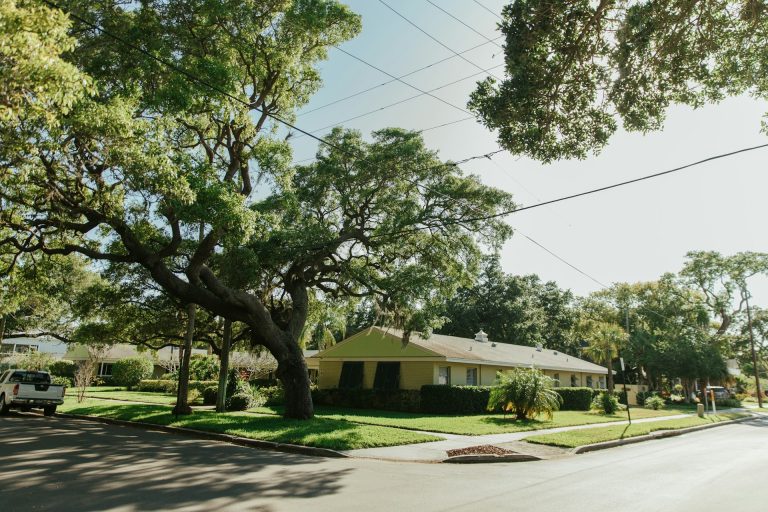
Montrose (Neartown-Montrose), the Museum District (Museum Park), and the Rice University area combine older housing stock with dense everyday amenities. You can walk to coffee, groceries, and a park in many pockets, which is not true across most of Houston.
Cultural access is the standout. The Menil Collection, Rothko Chapel, Hermann Park, and the Houston Zoo sit within a short drive or bike ride. Rice Village adds a walkable shopping and dining cluster.
Housing runs from historic bungalows to newer townhomes to mid-rise condos, so price per square foot varies block to block. Street parking pressure and older home systems (plumbing, electrical, foundations) are the practical costs of the character.
The Heights, Washington Avenue, and Rice Military for Character and Convenience
Greater Heights (The Heights), Timbergrove, Lazybrook, Washington Avenue (Washington Avenue Coalition), and Rice Military sit northwest of downtown with easy access to I-10 and Memorial Park. The Heights is known for historic bungalows and a walkable commercial spine.
Rice Military and the Washington Avenue corridor lean heavily toward newer townhomes on narrow lots. If you want low-maintenance square footage close to the center, that housing type does a lot of work.
The honest trade-offs here are teardown-and-rebuild activity that changes streets quickly, historic district rules in parts of the Heights, and drainage that varies sharply by block. Two houses on the same street can carry different flood histories. Verify at the property level.
River Oaks, Afton Oaks, and Upper Kirby for Central Living With Higher Housing Costs
River Oaks, the River Oaks District area, Afton Oaks, Upper Kirby, and Greenway (Greenway/Upper Kirby) sit between downtown and the Galleria in Greater Uptown. This corridor buys you a central location and access to Greenway Plaza and Galleria-area shopping without a long drive.
Housing costs are the constraint. River Oaks, in particular, represents the high end of the Houston market, while Upper Kirby and Afton Oaks include condos and townhomes at a range of price points.
For a mover with a Greenway Plaza or Galleria job and a flexible budget, the commute savings are real. For most buyers, the more useful question is how far the same money goes. This is where the employment-center map matters.
Living Near Major Employment Centers Without Letting the Commute Decide Everything
Houston has several job cores, and each one creates its own housing market around it. Picking a neighborhood by commute alone often means overpaying for proximity you may not need every day.
Here is how the main centers shape the search.
The Texas Medical Center, West University Place, and Braeswood Trade-Off
The Texas Medical Center (TMC) is one of the largest medical employment areas in the country, and the neighborhoods around it are priced accordingly. West University Place (West U, University Place), Southampton, Bellaire, Braeswood, and Meyerland all sit within a short drive of the Medical Center area.
West University Place and Southampton offer short commutes and established single-family homes at higher price points. Bellaire and Meyerland can offer more house for the money, with the important caveat that parts of Braeswood and Meyerland have documented flood history that must be checked address by address.
South of TMC, the MacGregor and Astrodome areas offer a different price equation and proximity to the University of Houston. A resident working brutal shift hours may value ten minutes of drive time more than any amenity. A two-income household may accept 25 minutes for a larger lot.
Memorial, the Energy Corridor, and West Houston Commute Considerations
The Energy Corridor along I-10 near Eldridge Parkway anchors West Houston, with major energy employers in the broader area. Memorial, Memorial Park adjacent areas, and neighborhoods near Terry Hershey Park put you close to that corridor with heavy tree cover and trail access.
Memorial-area homes tend to be single-family with larger lots, and prices reflect the location and school assignments. Farther west along I-10, your budget stretches. You commit to a corridor that backs up hard in both directions.
Terry Hershey Park’s trail system matters here for a specific reason. It doubles as flood control. Green space in West Houston often exists because water needs somewhere to go, which is useful context, not a warning by itself.
Greenway, the Galleria, and Downtown Job Access
Greenway Plaza, the Galleria in Greater Uptown, and Downtown Houston form a rough triangle in the center of the city. If your job sits in one of them, you have unusually wide housing options because so many neighborhoods feed those corridors.
That flexibility is worth using. Instead of asking which neighborhood is closest, ask which one gives you an acceptable commute plus the other two things on your priority list.
Consider the routes, not just the mileage:
- Inbound freeway direction at your actual start time, since Houston traffic is heavily directional
- Toll roads and whether your budget assumes daily toll costs
- METRORail or park-and-ride availability from the areas you are considering
- Backup routes for construction and flooding days
- Reverse commute options, which often run far lighter than the main flow
Why a Test Drive at Rush Hour Matters More Than a Map Pin
Mapping software gives you an average. Houston gives you a Tuesday at 7:40 a.m. with a stalled truck on the freeway.
Drive your real commute at your real departure time before you make an offer, in both directions if you can. Do it twice, on different days. Note where the route bogs down and whether an alternate exists.
Military families relocating on Permanent Change of Station (PCS) orders often have one house-hunting trip to work with. If that is your situation, build the rush-hour drives into the trip schedule the same way you would schedule showings. You cannot recover that information later from a website. If the drive changes your answer, your search area probably needs to expand outward.
When More Space, Schools, or Green Space Changes the Search Area
Once space, school assignment, or a specific price point becomes the top priority, the search almost always moves outside the Loop. The Houston metro’s suburbs each solve a different version of that problem.
The exchange is consistent: more house and more yard for more driving and more car dependence.
Katy, Sugar Land, and Richmond for Suburban Trade-Offs
Katy sits west along I-10 and is a common landing spot for households working in the Energy Corridor or points west. Sugar Land and Richmond sit southwest along U.S. 59 and offer master-planned communities, newer construction, and established retail.
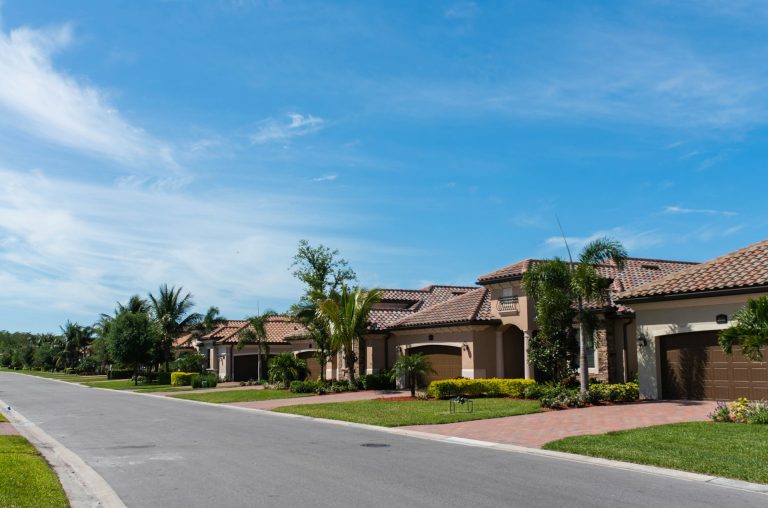
These areas typically deliver more square footage and larger lots than Inner Loop options at a comparable price. Newer subdivisions often come with HOA dues and, in many cases, municipal utility district taxes that raise the effective monthly cost.
Walkability is generally limited to within a neighborhood or a town center district. If a car-free errand run matters to you, that is the honest cost of the extra bedroom.
The Woodlands, Kingwood, and Humble for Space and Nature Access
The Woodlands sits north along I-45 and is known for its heavy tree canopy, an extensive trail system, and its own employment base. This means not everyone there commutes downtown. Kingwood and Humble, northeast of the city, offer a similar forested feel at a different price range.
For a retiree, this part of the metro often reads differently than it does for a commuter. Trail access, medical facility proximity, low-traffic errand routes, and single-story housing stock may outrank drive time to a downtown office entirely.
The trade-off is distance. A downtown commute from these areas is long and unforgiving during peak hours. The drive to Inner Loop culture becomes a planned outing rather than a spontaneous one.
Clear Lake and Pasadena for a Different Commute and Budget Equation
Clear Lake sits southeast of NASA’s Johnson Space Center and the water, with a boating and outdoor culture that does not exist elsewhere in the metro. Pasadena sits closer in along the ship channel with generally lower housing costs.
This side of the metro often prices below comparable homes on the west side. If your job is aerospace, petrochemical, or port-related, you also skip a cross-town commute that can eat 90 minutes a day.
Coastal proximity brings its own considerations: windstorm insurance, hurricane evacuation planning, and Galveston within reach for weekends. Whether that is a benefit or a cost depends entirely on how you weigh it.
How to Verify Public Schools, Park Access, and Property-Level Flood Exposure
Never accept a district-level or city-level answer on these three. All of them change at the address.
Work through this before you write an offer:
- Confirm school assignment with the district’s official attendance boundary lookup for that exact address, since boundaries change and listings go stale
- Check the campus, not just the district: individual school ratings vary widely inside the same district
- Look up the FEMA flood zone and ask the seller for any flood history and an elevation certificate
- Walk to the nearest park and time it, whether that is Buffalo Bayou Park, Hermann Park, or a neighborhood green space
- Check drainage on the block during or right after a heavy rain, if your timing allows
Our guide to researching a neighborhood walks through the full verification process step by step. Once you have real answers on the areas you are considering, the last job is comparing them fairly against each other.
Turn Your Houston Priorities Into a Shortlist
A shortlist works when every area on it gets judged by the same criteria. Most people compare Katy on schools, Montrose on walkability, and the Heights on charm. Then they wonder why the decision feels impossible.
Fix that by scoring each candidate area on the same short list of factors you defined at the start.
Compare a Few Areas Using the Same Personal Criteria
Pick three to five areas, no more. Then rate each one on your ranked priorities: commute, total monthly housing cost, school assignment, walkability, parks, and whatever else made your list.
Give yourself permission to score honestly. An area you love for its culture may score poorly on commute. Writing that down is the point, not a failure.
A first-time buyer should add one more column: monthly payment stress. A house that technically fits the pre-approval but leaves no margin for a new roof or a job change is a different risk than a slightly smaller house with room to breathe.
Use Neighborhood Data as Decision Support, Not a Universal Verdict
Neighborhood data tells you what is measured, not what your life will feel like. A safety score reflects a model and a boundary. Different tools draw differently.
Treat every score as one input. Crime estimates, school ratings, and walkability numbers each answer a narrow question. None of them answers whether you will be happy on that block.
If safety is a heavy factor for you, learn how the scores are built before you rely on them. Our breakdown of how to read crime maps covers methodology, boundaries, and the limits of modeled estimates in plain language.
Build a Personalized Map Before You Commit to a Block
The fastest way to see all your factors at once is to put them on one map. Instead of opening six tabs per neighborhood, set your priorities once and let every Houston area get measured against them together.
That view usually surprises people. An area that looked like an obvious yes on paper often slips when commute and monthly cost sit next to each other. A quieter candidate moves up.
You can explore neighborhoods based on your own priorities and see how the trade-offs stack up before you narrow to a block. That leaves one question: how do these areas actually compare on the specific things movers ask about most?
Frequently Asked Questions
Which Houston neighborhoods are a good fit for families who prioritize schools, parks, and everyday convenience?
There is no single answer, because school assignments change by address and priorities differ by household. Areas like West University Place, Bellaire, Memorial, Sugar Land, and The Woodlands come up often for families weighing schools and park access, but each carries a different price and commute. Confirm the assigned campus with the district and check the flood zone at the exact address before you decide.
Where should young professionals look for walkability, dining, nightlife, and an easy commute?
Movers who put walkability and social amenities near the top of their list often focus on Inside the Loop: Midtown, Montrose, EaDo, the Heights, and Upper Kirby. Expect smaller square footage, townhome or condo living, and a higher cost per square foot in exchange for that access. If your commute goes to the Energy Corridor instead of downtown, those same areas may cost you an hour a day.
What areas offer a realistic balance of home prices, safety, and commute time for first-time buyers?
Budget usually drives this more than any other factor, so start with the total monthly payment, including property taxes and insurance, not the list price. Suburban and outer-metro areas like Katy, Richmond, Humble, and parts of Clear Lake tend to offer more house per dollar, while inner-loop townhomes trade space for location. Compare the same three factors across every area you consider instead of judging each one on its strongest feature.
How do Montrose, Midtown, The Heights, and EaDo compare for lifestyle, housing, and day-to-day living?
Montrose Leanson older housing stock, cultural institutions, and a strong walkable amenity mix. Midtown and EaDo skew newer, denser, and closer to rail and downtown offices, with more apartments and townhomes and heavier event and nightlife activity. The Heights offers historic bungalows and a walkable commercial strip with more single-family housing. Rebuild activity and drainage vary from block to block.
Which Houston suburbs make sense for buyers who want more space without giving up access to jobs and amenities?
Katy, Sugar Land, The Woodlands, and Kingwood all pair larger homes with their own retail, medical, and, in some cases, employment bases. This reduces how often you drive into the city. The Woodlands and Katy have significant local job centers, so your commute may be shorter than the map distance suggests. Factor in HOA dues and municipal utility district taxes, since those change the real monthly cost.
What factors should I compare before choosing a Houston neighborhood for a relocation?
Compare commute time at your actual departure hour, total monthly housing cost including taxes and insurance, assigned schools if that applies, property-level flood exposure, walkability, and park access. Rank those factors before you tour, because Houston rarely gives you all of them in one place. Then score every candidate area on the same list so the comparison is fair.
Your Houston Answer Depends on Your Weekday, Not a Ranking
The best neighborhoods in Houston are not a fixed list. They are the handful of areas where your commute, your monthly payment, your household needs, and your daily habits all land in a place you can live with for years.
You already know more than most movers do: your work location, your real budget with taxes and insurance included, the trade-offs you are willing to make, and the three checks (schools, flood, drive time) that have to happen at the address level. That is a decision framework, not a guess.
When you are ready to see every Houston area measured against your own priorities at once, build your free personalized map with SettleSavvy and compare the trade-offs side by side. If you would rather talk it through first, book a free consultation with a Savvy Consultant and bring your list of questions.