What makes Las Vegas different?
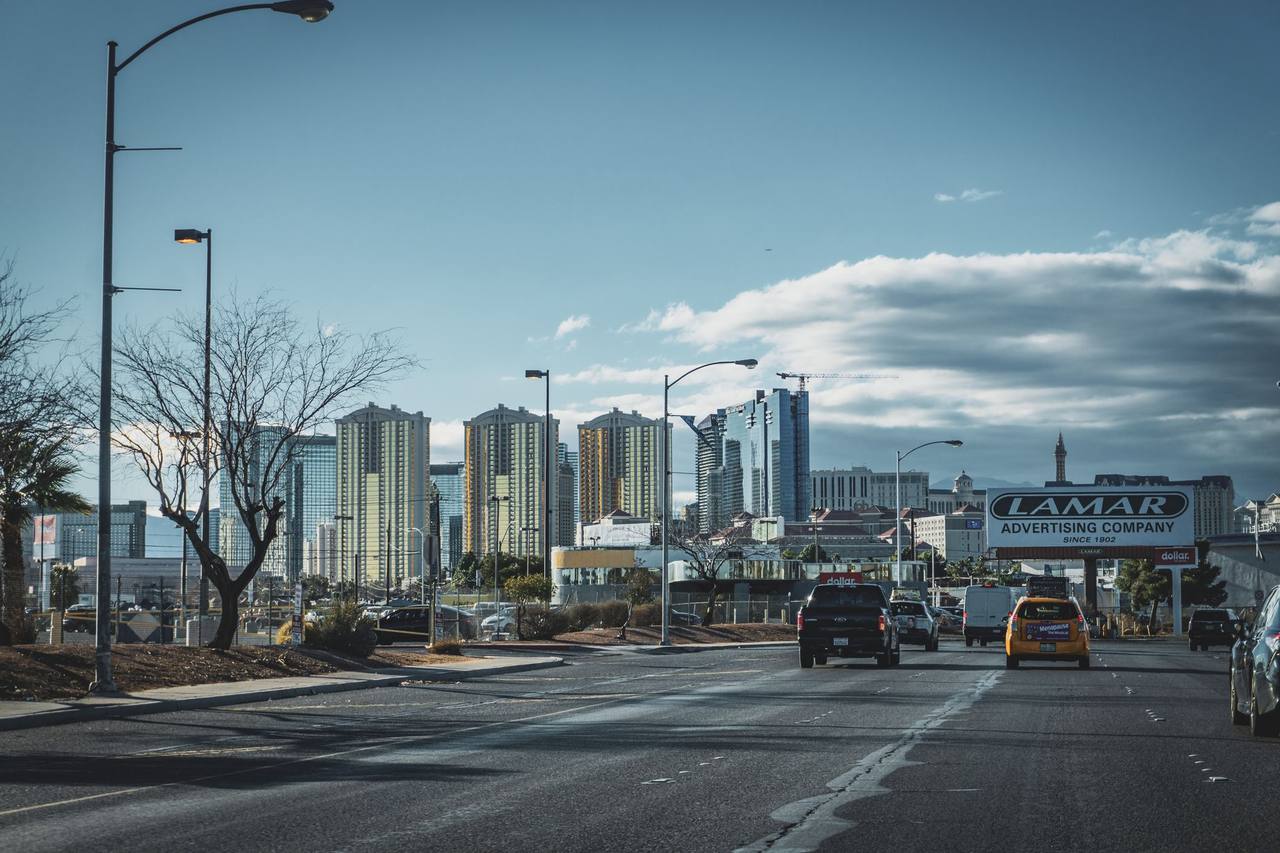
Las Vegas shines brighter at night than any other U.S. metro area. It tops all 918 metros for nighttime lighting, nearly tripling the brightness you'd expect for a city of its size. The Strip, along with clusters of resorts, parking lots, and signage, contribute greatly to this brightness. The buildings in the area also cover more ground than is typical for a city of 2.3 million people. This illuminated city runs on shifts, with nearly a quarter of its workforce employed in the service sector, about 50% more than expected. On the other hand, fewer work in professional and managerial roles. While tourism, gaming, and conventions play a big part in this, much of the rest is powered by healthcare, warehousing, and construction sectors.
In Las Vegas, recreation is created rather than naturally occurring. The metro features networked walking and biking trails that stretch nearly 20 times further than expected for its size. However, the natural vegetation is only about half of what you'd expect, and there are fewer playgrounds. This discrepancy highlights how the greenways are added into master-planned suburbs such as Summerlin and Henderson's Green Valley. Landscaped paths are built over lands with little indigenous vegetation. Public-transit stops exceed expectations, but the area remains car-dependent, with most people driving between subdivisions, workplaces, and errands.
Located in the Mojave Desert, Las Vegas avoids the disasters that often raise costs in other regions. Since 2005, it has had only two federal disaster declarations, the fewest of any large metro area. Homeowners insurance is among the cheapest, with no hurricanes or tornadoes inflating prices. Many residents are transplants, though one community has deep roots. Latter-day Saints account for about six times the share you'd expect based on their national demographic, a legacy of Mormon settlement long before casinos arrived. Las Vegas attracts those seeking newly built homes, a warm, dry climate, and low weather risks, appealing less to those who value natural greenery or high-performing schools, as local test scores fall below what is typical for a metro of its size.
Religion, politics, nightlife, big yards: important to different people, useless in a national index. Tell us which details matter to you and we'll surface them for every Las Vegas, NV neighborhood in a free personal report.
Build my free Las Vegas, NV report
What does it cost to live in Las Vegas?
#790 of 918
▾
Las Vegas ranks as one of the more pricey U.S. metropolitan areas, landing 790th out of 918 for affordability, primarily due to housing. Two-bedroom apartments rent for over $1,600 monthly, putting them in the top 10% of metro areas. Home prices average about $267 per square foot, higher than in seven out of eight metros. In contrast, everyday living costs are slightly below the national average. Nevada has no state income tax, and property taxes are low, around 1% of home value, among the lowest in metros. These tax breaks help but only partially. The median household income is about $92,000, slightly above the national average. However, home prices have risen faster than wages in this tourism-heavy economy, and gas at around $4.24 per gallon is higher than in 90% of other metros.
$1,612 /mo
2BR median rent94th pctile of US metros
- Tampa, FL$1,625
- Salt Lake City, UT$1,617
- Las Vegas, NV$1,612
- Durango, CO$1,607
- Ann Arbor, MI$1,600
$1,880 /mo
Owner housing cost82nd pctile of US metros
- East Stroudsburg, PA$1,886
- Brenham, TX$1,881
- Las Vegas, NV$1,880
- Coeur d'Alene, ID$1,875
- Jacksonville, FL$1,874
98 US=100
Everyday prices59th pctile of US metros
- Sebring, FL98
- Carson City, NV98
- Las Vegas, NV98
- Elko, NV98
- Pahrump, NV98
$4.24 /gal
Gasoline90th pctile of US metros
- Gardnerville Ranchos, NV$4.25
- Reno, NV$4.24
- Las Vegas, NV$4.24
- Carson City, NV$4.24
- Elko, NV$4.24
Neighborhoods show a median price of about $260 per square foot. The cheapest quarter of homes is under $229 per square foot, and the bottom tenth is near $201, showing a wide price range. Prices differ based on schools, safety, and job proximity but allow for bargains. More affordable areas are North Las Vegas and east-side Sunrise Manor, often requiring longer commutes to the Strip, older homes, or new construction farther north. Schools here generally score lower than in Summerlin and Henderson. Buyers prioritizing space over a short commute can find affordable options, while those seeking specific schools or quick drives will need to pay more.
Tell us which things matter most and we'll tell you the Las Vegas, NV neighborhoods where you can find them.
Find the right Las Vegas, NV neighborhood at the right price
Is Las Vegas safe?
#794 of 918
▾
Las Vegas ranks in the bottom sixth of U.S. metro areas for safety, with violent crime ratings lower than property crime. SettleSavvy evaluates every U.S. neighborhood using a letter-grade scale. We use the best available data to build a model of crime location and frequency. You can read more about the grading method here. While the overall grade for Las Vegas is low, there is considerable variation: the safest 10% of neighborhoods are graded between B and A, while the least safe 10% score near failing. Only about one-quarter of neighborhoods perform better than the national average for violent crime.
C-
Violent crime12th pctile of US metros
- El Campo, TXC-
- Searcy, ARC-
- Las Vegas, NVC-
- Denver, COC-
- Monroe, LAC-
C-
Property crime21st pctile of US metros
- Topeka, KSC-
- Portsmouth, OHC-
- Las Vegas, NVC-
- Salina, KSC-
- Salem, ORC-
The safer areas are found in the well-planned suburbs. Neighborhoods like Summerlin, on the west edge, and Henderson and Southern Highlands to the south, enjoy strong safety scores thanks to patrolled streets, keeping their grades in the A range. In contrast, the neighborhoods with failing grades are clustered around the Strip, the Fremont Street corridor, downtown, and the older core of the city. A major factor dragging down the overall grade is the constant flow of tourists in this small area, which impacts crime statistics that count against residents, despite the presence of millions of visitors. Those who can buy in Summerlin or Anthem enjoy A-rated neighborhoods, while more affordable rentals near the tourist corridor have some of the metro's lowest grades.
Is Las Vegas a good place to raise a family?
#507 of 918
▾
Las Vegas ranks 507th out of 918 U.S. metros for family friendliness, sitting near the middle. Low school test scores keep it from ranking higher, with its school grade in the bottom quarter of metros and consistent across neighborhoods due to a single county-wide district. However, Las Vegas has more families with kids than many similarly sized metros, with children under 18 making up about 20% of the population.
0.7
Playgrounds in reach66th pctile of US metros
- Kingsville, TX0.7
- Corsicana, TX0.7
- Las Vegas, NV0.7
- Springfield, MA0.7
- Daphne, AL0.7
7%
Under-5 share55th pctile of US metros
- Brookings, SD7%
- Longview, WA7%
- Las Vegas, NV7%
- Kiryas Joel, NY7%
- Kankakee, IL7%
15%
School-age share63rd pctile of US metros
- Oxnard, CA15%
- Hutchinson, MN15%
- Las Vegas, NV15%
- Tupelo, MS15%
- Dubuque, IA15%
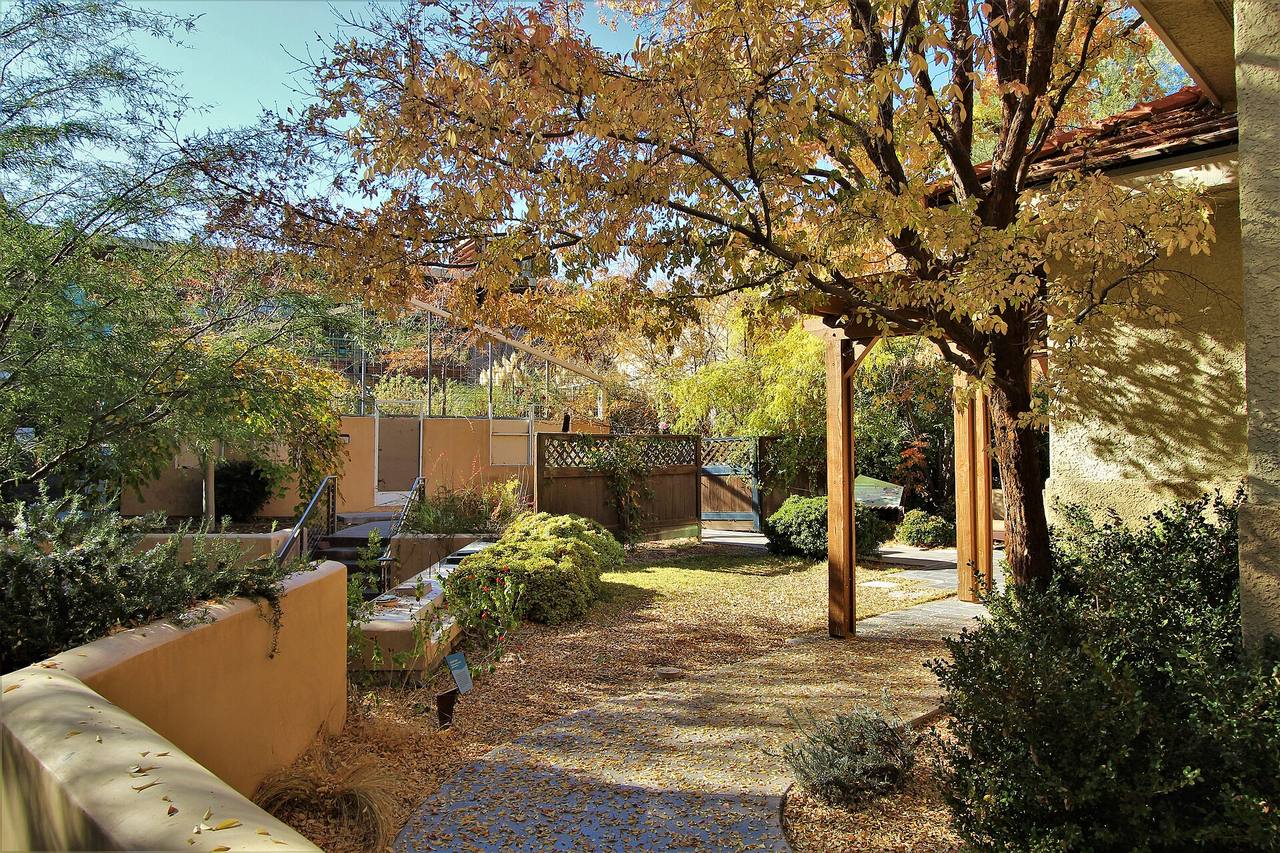
Clark County operates the fifth-largest school district in the country, so moving to a better district isn't an option. The same grade applies across all addresses, prompting families to seek magnet schools or master-planned suburbs like Summerlin, Henderson, and Southern Highlands. Playground sizes are above the median, but half of the neighborhoods lack any within two miles. Childcare poses a major challenge, as the casino and hospitality sectors rely on swing and overnight shifts that daytime daycare doesn't cover. This impacts parents working on the Strip. Families who can afford newer suburbs and research specific schools may find the area manageable, but shift workers depending on one nearby option face challenges.
What is the weather like in Las Vegas?
#723 of 918
▾

Summer sets the tone for the year. From June to August, the average high temperature hovers around 98 degrees, and about 123 days exceed 90 degrees, making up about a third of the year. The air remains dry, so the heat feels more like a furnace than a sauna. July dew points around 43 are among the lowest in any US metro area. Las Vegas sees just seven inches of rain annually, placing it among the driest metros in the nation. Winters are mild, with night temperatures dropping below freezing about 40 times, but daytime temperatures are comfortable, and snow rarely sticks in the valley. Fewer days fall into the pleasant category than in most metro areas, and summers are warming faster than almost anywhere else.
73 /yr
Pleasant days23rd pctile of US metros
- Lincoln, NE74 /yr
- Norfolk, NE74 /yr
- Las Vegas, NV73 /yr
- Portsmouth, OH73 /yr
- Arkansas City, KS73 /yr
98 °F
Summer high99th pctile of US metros
- Laredo, TX98 °F
- Eagle Pass, TX98 °F
- Las Vegas, NV98 °F
- McAllen, TX97 °F
- Town of Pecos, TX97 °F
37 °F
Winter low83rd pctile of US metros
- Minden, LA37 °F
- Meridian, MS37 °F
- Las Vegas, NV37 °F
- Newport, OR37 °F
- Greenwood, MS37 °F
9 in/yr
Snowfall42nd pctile of US metros
- Farmington, MO9 in/yr
- Bartlesville, OK9 in/yr
- Las Vegas, NV9 in/yr
- Mount Sterling, KY9 in/yr
- Corbin, KY9 in/yr
28 /yr
Rainy days0th pctile of US metros
- Phoenix, AZ32 /yr
- Town of Pecos, TX29 /yr
- Las Vegas, NV28 /yr
- Riverside, CA26 /yr
- Bishop, CA22 /yr
123 /yr
Hot days (90°F+)98th pctile of US metros
- Clewiston, FL129 /yr
- Lake Havasu City, AZ128 /yr
- Las Vegas, NV123 /yr
- Beeville, TX123 /yr
- Lakeland, FL122 /yr
42 /yr
Freezing days17th pctile of US metros
- Ukiah, CA42 /yr
- Fredericksburg, TX42 /yr
- Las Vegas, NV42 /yr
- Bremerton, WA42 /yr
- Americus, GA42 /yr
43 °F
Summer dew point5th pctile of US metros
- La Grande, OR43 °F
- Ogden, UT43 °F
- Las Vegas, NV43 °F
- Flagstaff, AZ43 °F
- Montrose, CO42 °F
The desert largely avoids major disasters. Clark County has had just two federal disaster declarations since 2005, and threats like hurricanes, coastal flooding, and tornadoes are minimal. Two main risks remain. Extreme heat is the deadliest. The second is the summer monsoon, which runs from mid-June to September. A single storm can unleash an inch of rain in minutes onto ground unable to absorb it, causing water to race through washes and underpasses at deadly speeds. Drought conditions loom over everything, with the Colorado River and Lake Mead facing strain that shapes regional water policy. Planning around summer is essential to enjoy mild, sunny winters and clear skies most of the year.
What kind of amenities does Las Vegas have?
#22 of 918
▾
Las Vegas ranks 22nd among more than 900 US metro areas for amenities, considering access to dining, shopping, services, and transit from the average neighborhood. This high ranking is due more to population density than the Strip itself. While the restaurant access is among the best, there's a significant disparity: the densest 10% of neighborhoods have reach to nearly 90 restaurants, whereas the sparsest 10% have access to only about three. Shopping and services show a similar pattern, meaning your location strongly influences available amenities.
5.5
Nightlife spots92nd pctile of US metros
- Lexington, KY5.5
- Lansing, MI5.5
- Las Vegas, NV5.5
- Omaha, NE5.4
- Bend, OR5.4
135.5
Transit stops97th pctile of US metros
- Boulder, CO144.5
- Racine, WI144.4
- Las Vegas, NV135.5
- Tampa, FL133.3
- Trenton, NJ128.9
22.3
Everyday services94th pctile of US metros
- Alpena, MI22.5
- Minneapolis, MN22.5
- Las Vegas, NV22.3
- Athens, GA22.0
- Scranton, PA21.7
1.7
Gyms85th pctile of US metros
- DuBois, PA1.7
- Mount Pleasant, MI1.7
- Las Vegas, NV1.7
- Deltona, FL1.6
- Worcester, MA1.6
The level of density in Las Vegas is a surprising factor. Despite being 29th in overall population, it has a high number of people per square mile, surpassing almost any other US metro. This is because federal land and surrounding mountains confine the valley, encouraging upward development rather than outward sprawl, which enhances accessibility. Despite the city’s entertainment reputation, bars and clubs are mostly found on the Strip and downtown, leaving residential neighborhoods with limited nightlife access; a quarter of them have none within two miles. Public transit in Las Vegas performs better than in most Sun Belt cities, thanks to the RTC's frequent lines along the resort corridor. The benefits of living in Las Vegas are strongest near the city center and decrease as you move toward the outskirts.
What's outdoor access like in Las Vegas?
#204 of 918
▾
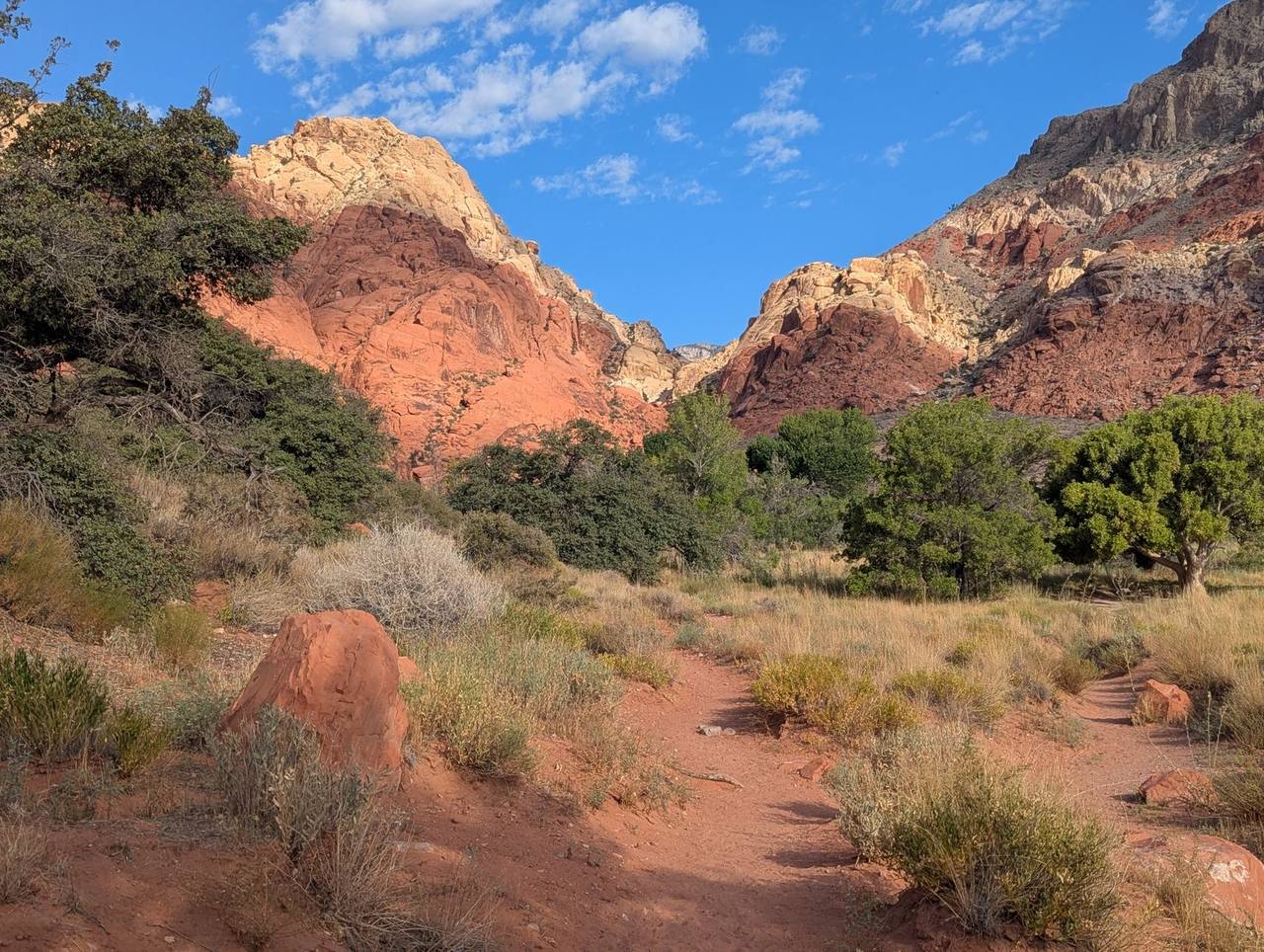
Las Vegas ranks in the top quarter of U.S. metropolitan areas for green space, a statistic derived from two contrasting realities. Around nine percent of the metro's land sports natural vegetation, placing it near the bottom nationally. This is partly due to the Mojave Desert setting on the valley floor and efforts to remove lawns to conserve Colorado River water. Despite this, the area's score is bolstered by accessibility: most neighborhoods feature one or two parks within a couple of miles, and about a quarter have access to an extensive trail network spanning over two thousand miles.
1.5
Parks in reach87th pctile of US metros
- Rice Lake, WI1.5
- Parkersburg, WV1.5
- Las Vegas, NV1.5
- Wabash, IN1.5
- Sparta, WI1.4
885.7 mi
Connected trail miles98th pctile of US metros
- Reno, NV939.8 mi
- Tucson, AZ927.4 mi
- Las Vegas, NV885.7 mi
- Hailey, ID866.7 mi
- Breckenridge, CO824.5 mi
Most of these trails and parks are found in the federal wildlands surrounding the valley, rather than in neighborhood greenbelts. Red Rock Canyon is located twenty miles to the west, Lake Mead and the Colorado River are to the east, and the pine forests of Mount Charleston are an hour to the northwest. Here, green space means desert and mountain areas that can be reached by car and trailhead, rather than neighborhood lawns. This setup suits those who love hiking, riding, or boating but offers less to those seeking a shaded park within walking distance. Local parks have gravel and drought-tolerant plants, and any remaining ornamental grass is being removed under a state mandate by 2026.
How affluent is Las Vegas?
#534 of 918
▾
Las Vegas ranks below the middle among US metro areas in terms of affluence, considering income, education, and occupation. While the median household income is nearly $92,000, placing it in the upper third of metros, the share of workers in professional or managerial jobs is below average. This lack of white-collar jobs, unusual for a large metro, lowers its overall standing. Income levels also vary by neighborhood, from about $52,000 to $132,000, reflecting differences between service-worker areas and upscale neighborhoods like Summerlin and Henderson.
33%
White-collar jobs36th pctile of US metros
- Yuba City, CA33%
- St. Joseph, MO33%
- Las Vegas, NV33%
- Madisonville, KY33%
- Clinton, IA33%
17%
Bachelor's (men)64th pctile of US metros
- Warner Robins, GA17%
- Jackson, MS17%
- Las Vegas, NV17%
- Cañon City, CO17%
- Burlington, NC17%
18%
Bachelor's (women)57th pctile of US metros
- Seneca Falls, NY18%
- Wichita Falls, TX18%
- Las Vegas, NV18%
- Iron Mountain, MI18%
- Kennewick, WA18%
The city's decent pay but few professional opportunities are linked to its casino economy. Nearly a quarter of Las Vegas workers are in the service sector, one of the highest rates among metros, with many jobs unionized. The Culinary Union, for example, represents most Strip workers, enabling bartenders or porters to earn middle-class wages without a degree. This boosts earnings above what occupation alone would suggest. However, rents are among the highest in any metro, meaning this pay covers less housing. The economic setup favors those in the unionized hospitality industry or in places like Summerlin and Henderson but presents challenges for anyone relying on the white-collar job market typical of metros this size.
What is the Las Vegas community like?
#883 of 918
▾
Las Vegas ranks near the bottom among U.S. metropolitan areas for community stability, coming in at 883rd out of 918. The typical resident has lived there for about eight years, one of the shortest durations in the country. This is even brief by the standards of large metropolitan areas, which typically experience high turnover. Less than 60% of homes are owner-occupied. Short residency is consistent across nearly every neighborhood, making it a common characteristic, while homeownership levels vary significantly from one neighborhood to another.
58%
Owner-occupied5th pctile of US metros
- Lubbock, TX59%
- Grand Forks, ND59%
- Las Vegas, NV58%
- Huntsville, TX58%
- Champaign, IL58%
52%
Coupled households26th pctile of US metros
- Parkersburg, WV52%
- Clarksburg, WV52%
- Las Vegas, NV52%
- San Angelo, TX52%
- Roanoke, VA52%
41%
Divorced (of ever-married)81st pctile of US metros
- Columbia, SC41%
- Syracuse, NY41%
- Las Vegas, NV41%
- Moscow, ID41%
- New Iberia, LA41%
This constant turnover has structural roots. Las Vegas attracts people from California, Arizona, and the Midwest, and its service-based economy relies on renters and transient workers. The proportion of newcomers in the past year is average for U.S. metros, indicating that the short residency span results from a longstanding pattern of movement rather than a recent influx. Divorce rates are high, ranking above four-fifths of U.S. metros, and the area has a significant share of single-parent households. This reflects economic stress and limited support networks, as many residents live far from their families. The city suits those seeking an easy move with few neighborly ties but poses challenges for those looking to settle in a stable community.
Where are the best places to live in Las Vegas?
We assessed every town and community in the Las Vegas valley on factors movers care about: safety, cost, schools, green space, jobs, and daily amenities. We then matched each place to the type of mover it suits. Here is how different priorities rank across the area.
Best for relocating retirees: Summerlin South
Summerlin South, on the west rim of the valley below Red Rock Canyon, is the safest part of the Las Vegas area, with streets earning A-level crime grades. Retirees will find the area's safety appealing, along with landscaped trails and stable, owner-occupied neighborhoods. These features are uncommon where people move often. Although housing here is costly, it attracts buyers who prioritize tranquility over a short commute. Enterprise and Spring Valley run close behind.
Best for military families on new orders: Sunrise Manor
Sunrise Manor is located in the working-class northeast valley, right next to Nellis Air Force Base. It's the closest neighborhood to the base's flight line. For families who receive new orders, it offers the most affordable housing near Las Vegas. While the homes are older and the drive to the Strip is longer, it's still considered safer for children compared to other budget-friendly areas in the valley. Winchester and Spring Valley run close behind.
Best for a fresh start: Winchester
Winchester is centrally located, just minutes from the Strip and UNLV, offering the second-best access to restaurants, shops, services, and frequent buses in the area. For someone restarting on a tight budget, this access, low rents, and nearby job opportunities cover the essentials on foot or by transit. However, the area lacks a sense of permanence, as it is one of the most transient corners of the valley, with many short-stay renters. Summerlin South and Spring Valley run close behind.
Best for young professionals: Paradise
Paradise surrounds the Strip and UNLV. As an unincorporated and dense area, it offers close access to many jobs. For young professionals, this means a short commute with dining, shopping, and nightlife nearby. However, this central area also has the highest concentration of the valley’s crime, resulting in low safety grades. Enterprise and Winchester run close behind.
Best for grad school and med programs: Spring Valley
Spring Valley is in the west-central area next to UNLV, offering a convenient location for grad or med students who want to be close to campus without living near the Strip. It's the second-safest area, and there is easy access to shops, food, and transit near the core. Rents aren't the cheapest, but the balance of safety, convenience, and campus proximity attracts students here. Winchester and Sunrise Manor run close behind.
Best for mid-career moves: Enterprise
Enterprise, a newer master-planned community in the southwest, is the second-most affluent area, appealing to mid-career movers with its high income and professional opportunities. The area offers both safety and long-term homeownership, along with new constructions that provide trail access, uncommon in most of the valley. While the schools in Enterprise are similar to others in Clark County, families often choose schools based on specific magnet programs. Summerlin South and Paradise run close behind.
Best for you: my map
No two moves weigh these things the same way. Schools first or price first, quiet streets or a walkable night out, everyone is looking for something different. Tell us what matters most to you and we'll build your own Las Vegas map together, every neighborhood scored to your priorities.
Every neighborhood in Las Vegas, NV, mapped and scored on the factors you pick. Start from our defaults, then tune the weights until the map shows where you belong.
Open the Las Vegas, NV neighborhood map