Pros and Cons of Townhouses for Families Moving States
Relocating across state lines with a family in tow is one of life’s biggest adventures. Yet, amid the excitement of new beginnings, the hunt for the perfect home often brings overwhelming choices. Single-family houses promise space but demand high maintenance. Apartments offer convenience but lack privacy. For many families, a townhouse emerges as a smart middle ground, blending affordability and community without the isolation of sprawling suburbs.
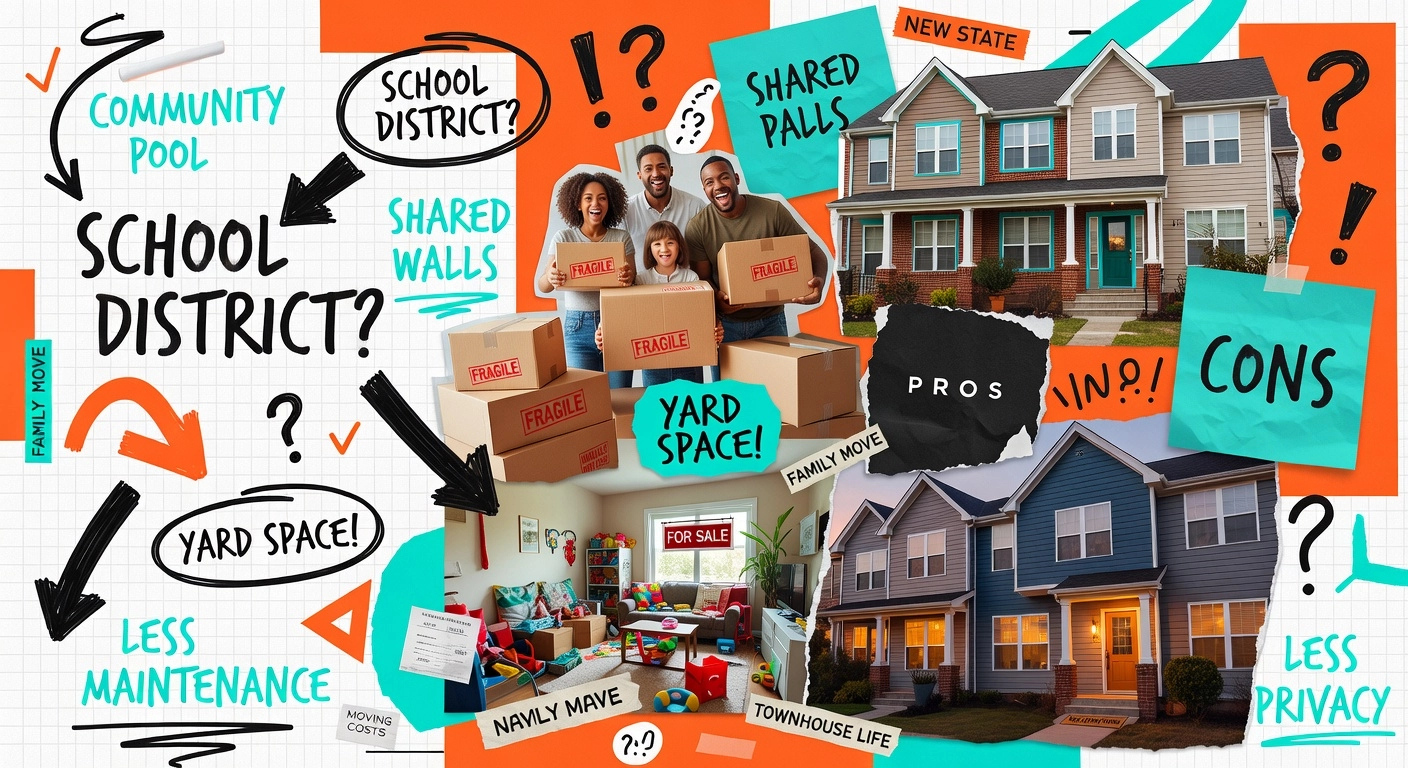
If you are considering a townhouse for a family during this move, you need clear insights to make an informed decision. As experts in family relocation housing, we have analyzed countless options. This post delivers a balanced comparison of the pros and cons tailored to your needs. You will discover advantages like shared maintenance that frees up family time, built-in neighborhood support ideal for busy parents, and cost savings that stretch your relocation budget. On the flip side, we address drawbacks such as limited outdoor space, noise from neighbors, and HOA rules that might cramp your style.
By the end, you will have the authoritative guidance to weigh these factors against your family’s lifestyle. Whether townhouses align with your vision or steer you elsewhere, this breakdown empowers beginners like you to choose confidently.
What Defines a Townhouse for Family Life
Townhouses represent a smart middle ground for families seeking a townhouse for a family, defined as multi-level attached homes that share one or two walls with neighboring units. Unlike condominiums, which often feature stacked units with extensive shared ownership of common areas, townhouses provide private entrances and more house-like independence. Compared to fully detached single-family homes, which offer complete privacy and larger yards but at a premium price, townhouses deliver vertical space efficiency on smaller lots. This design suits cross-state movers prioritizing quick settlement in vibrant neighborhoods. For precise distinctions, see the difference between a townhouse and townhome or townhouse features pros and cons.
Families find townhouses appealing for affordability and space in high-cost areas like Raleigh and Charlotte, where detached homes often exceed $500,000-$600,000 while new townhouses start under $400,000, saving $70,000-$90,000. In Raleigh, townhouse market share surged from 14% to 34% over the last decade; Charlotte’s grew from 6% to 30% since 2015, driven by land scarcity and walkable communities near schools and parks. These factors ease the moving process for beginners relocating across states, offering immediate value through lower entry costs and family-sized layouts averaging 2.7 bedrooms.
Busy parents benefit from attached garages for secure storage, multi-level designs separating living and sleeping areas, and HOA-managed exteriors handling landscaping, snow removal, and maintenance. This low-upkeep model frees time for family life during transitions. Notably, townhouses claimed 18.7% of single-family starts in Q3 2025, the highest since 1985 per NAHB Eye on Housing, signaling strong demand for this practical option. For cross-state families, townhouses streamline unpacking into stable, community-focused living.
Affordability Edge Over Single-Family Homes
Townhouses deliver a substantial affordability advantage over single-family homes, positioning them as a prime townhouse for a family choice amid today’s housing crunch. Data from Rocket Mortgage shows townhouses typically cost $70,000 to $90,000 less than comparable detached homes, thanks to shared walls, smaller lots, and efficient builds. Nationally, median townhouse prices hover around $365,000, compared to $405,000 to $439,000 for single-family homes, per recent Redfin analysis. This 16-17% discount frees up funds for families prioritizing space over expansive yards.
New townhomes amplify this edge, averaging under $400,000 versus $500,000 to $600,000 for detached homes in booming metros like Raleigh and Charlotte, where townhouse market share has surged from 14% to 34% and 6% to 30% over the past decade. Builders respond to demand with 179,000 starts over the last four quarters through Q3 2025, up 1% year-over-year and claiming a record 18.7% of single-family starts, the highest since 1985.
For cross-state movers like you, this means easier access amid single-family inventory shortages, which hit a 4 million-unit gap in 2025. Lower costs and HOA-managed maintenance, such as landscaping and snow removal, stretch budgets toward top-rated schools and safe neighborhoods. We specialize in guiding relocators to these family-friendly spots, simplifying your move with targeted neighborhood matches. Opt for townhouses to secure more home for your money without the upkeep hassle.
| Metric | Townhouses | Single-Family Homes |
|---|---|---|
| Median Price | ~$365,000 | $405,000-$439,000 |
| Recent Starts Share | 18.7% | Dominant, low supply |
Family-Friendly Features and Amenities
Townhouses stand out as a townhouse for a family option through their thoughtful multi-level designs, which create distinct zones for kids and adults. Typically spanning two or three stories, these homes place bedrooms and play areas upstairs while reserving ground floors for living rooms, kitchens, and home offices, minimizing noise conflicts compared to single-story apartments or sprawling detached homes with poor separation. Most include attached garages for one or two family vehicles, plus guest parking, offering superior convenience over condos without dedicated spots. This layout supports growing families efficiently, with average sizes providing 2.7 bedrooms and ample storage, as noted by the Institute for Family Studies. For cross-state movers, prioritize floor plans with main-floor suites to ease unpacking and settling in.
Homeowners Associations (HOAs) further simplify life by managing exteriors, landscaping, snow removal, and common areas for fees of $200 to $500 monthly, far less burdensome than full upkeep on detached homes. This frees busy parents from weekly chores, allowing focus on family bonding or school runs. In snowy regions like Charlotte, where townhouse market share jumped from 6% to 30% since 2015, HOAs ensure clear paths year-round. Cross-state families benefit immensely, as low-maintenance means quicker transitions without hiring services upon arrival.
Communities enhance appeal with pools, playgrounds, clubhouses, and walking trails, fostering social ties absent in isolated single-family neighborhoods. Walkable access to parks and shops cuts commute stress, ideal for newcomers scouting via our neighborhood-matching service.
Proximity to top-rated schools adds safety via pedestrian paths and low-traffic streets, streamlining enrollment for relocating families. In booming areas like Raleigh (townhouse share up to 34%), this setup outperforms rural detached options, per NAHB data on 18.7% national starts. Action step: Map school districts early to secure seamless moves.
Location Perks for Relocating Families
When relocating across state lines, townhouses offer unbeatable location perks that simplify the moving process for families, especially in booming North Carolina markets like Raleigh and Charlotte. These developments prioritize family needs by clustering near top-rated schools, fostering walkable communities, and supporting multigenerational living, all while capitalizing on rapid market growth. Compared to detached homes in remote suburbs, townhouses cut commute times and integration hassles, making them ideal for beginners scouting new neighborhoods.
Proximity to Top-Rated Schools Reduces Parental Stress
Townhouse communities in Raleigh’s Wake County suburbs, such as Cary and Apex, sit adjacent to A-rated public schools with 85% proficiency in math and reading. In Charlotte’s Union County areas like Ballantyne, similar clustering ensures drives under 10 minutes, boosting family satisfaction by 20-30% per relocation surveys. This strategic placement eases the move-in phase; parents avoid long school runs while kids settle faster. Action step: Use school rating tools to filter listings within 2 miles.
Walkable Neighborhoods Boost Outings and Safety
Raleigh’s North Hills and Charlotte’s Dilworth feature sidewalks linking townhouses to parks and shops, with Walk Scores of 50-70 and crime rates safer than 80% of U.S. cities. Families report stronger community ties and fewer accidents here versus car-dependent areas. For cross-state movers, this means immediate outings without navigation stress. Prioritize greenways like Raleigh’s American Tobacco Trail for seamless family adjustment.
Surging Market Shares in Raleigh and Charlotte
Raleigh’s townhouse market share jumped from 14% to 34% over the last decade, while Charlotte’s rose from 6% to 30% since 2015, per recent housing data, offering abundant inventory at medians under $420K. See townhomes taking over for families. These trends provide prime, stable options versus slower single-family markets.
Modern Designs for Multigenerational Families
Featuring main-floor suites and soundproofing, Raleigh’s Brier Creek and Charlotte’s Providence Crossing townhouses accommodate elders or grown kids, with demand up 30%. This flexibility pools resources during moves, unlike rigid detached layouts. Families gain privacy and cost savings in one package. Recommendation: Target “Next Gen” models for long-term ease.
These perks streamline your relocation; start by mapping school-walkable zones in NC for the best townhouse for a family fit.
Key Drawbacks Compared to Detached Homes
Shared Walls and Noise Issues
While townhouses appeal as a townhouse for a family due to affordability, shared walls create significant noise transmission compared to detached homes’ full privacy. Neighbors’ conversations, footsteps, TV sounds, or children’s play easily penetrate party walls, disrupting remote workers on client calls or families during nap times. Older builds suffer most with thin insulation, but even new ones often lack robust soundproofing; advanced double walls with cellulose can hit STC 52 ratings for 9 dB better isolation, yet only 5% of markets adopt them. For cross-state movers, visit during evenings to test noise levels and review neighbor reviews. Data shows noise ranks as a top multifamily complaint, just behind maintenance. Detached homes eliminate this entirely, offering quiet for hybrid work setups.
Stairs, Accessibility, and Safety Concerns
Multi-level townhouse layouts demand constant stair use, posing risks absent in single-story detached homes ideal for families. Toddlers face fall hazards on unchildproofed stairs, while elderly relatives or those with mobility needs struggle daily, from groceries to laundry. Falls lead U.S. senior injuries, making stairs dangerous for aging-in-place. Actionable step: Prioritize main-floor bedrooms or plan costly stairlifts during neighborhood scouting.
Limited Outdoor Space
Townhouse yards average 1,530 to 3,000 square feet, versus 8,506 square feet for new detached lots, curtailing playsets, gardening, or pet areas. Families turn to community parks, but unstructured play drops compared to spacious single-family yards. For movers, measure lots and check nearby green spaces.
HOA Costs and Restrictions
Nearly 85% of townhouses mandate HOAs with median $135 monthly fees, up 25% since 2019, covering amenities but adding $1,620 yearly not typical in detached ownership. Rules limit pets, parking, or decor, risking fines. Review docs pre-move; detached homes grant full control. See full pros/cons in Redfin’s townhouse guide and Homes.com analysis. Despite these, townhouses suit short-term family moves.
2026 Market Trends Driving Townhouse Demand
Townhouse Starts Hit Nearly 20% of Single-Family Housing, Fueled by First-Time Buyers and Affordability Crisis
Townhouse construction reached 18.7% of single-family starts in Q3 2025, the highest since 1985, with 179,000 units over the prior four quarters, up 1% year-over-year NAHB on townhouse gains. This surge stems from first-time buyers facing detached home prices over $500,000, while new townhouses average under $400,000, a $70,000 to $90,000 savings. For cross-state movers, this trend simplifies finding a townhouse for a family without stretching budgets. Compared to detached homes, townhouses offer quicker market entry amid inventory shortages. Builders prioritize them for steady demand, making neighborhoods like Raleigh (34% market share) ideal relocation targets.
Suburban Growth Addresses Low Detached Inventory
Suburban townhouse developments fill gaps left by scarce detached homes, with sales steadier at 50-70 days on market versus volatile detached segments. Prices rise modestly by 1-3% in 2026, contrasting flat detached trends in oversupplied areas 2026 real estate outlook. Families benefit from walkable communities near schools, easing moves. This positions townhouses as reliable options over detached homes, which lag due to slow sales.
Design Improvements Like Soundproofing and Open Plans
Enhanced designs feature soundproofing via acoustic panels and “broken” floor plans with pocket doors, minimizing noise through shared walls while maintaining open flow. These suit families better than older models, rivaling detached privacy. Main-floor suites aid multigenerational setups, streamlining relocation logistics.
51% of Gen Z and Millennials Plan Purchases
Per 2025 reports, 51% of these buyers target medium-density townhouses for affordability and amenities, boosting demand housing starts data. They favor them over apartments or pricier detached homes, perfect for young families moving states. Scout these trends in high-growth suburbs for seamless transitions.
Side-by-Side Comparison Table for Families
For families eyeing a townhouse for a family during a cross-state move, a side-by-side comparison with single-family detached homes clarifies trade-offs, helping you prioritize affordability and ease. Townhouses shine in low-maintenance living that speeds up settling in new neighborhoods, while detached homes offer long-term privacy at higher costs. Drawing from 2025-2026 data, townhouses average $70,000 to $90,000 less than comparable single-family homes, with new builds often under $400,000 versus $500,000 to $600,000. This gap, plus HOA-handled upkeep like landscaping and snow removal, frees families to focus on unpacking rather than yard work. In markets like Raleigh, where townhouse market share jumped from 14% to 34% over the last decade, they provide stable value for short-term stays.
| Aspect | Townhouse | Single-Family Detached | Winner for Families Moving Cross-State |
|---|---|---|---|
| Cost | Lower purchase (median ~$365k); HOA fees ~$135/mo cover maintenance, utilities cheaper via shared walls. Saves $200-300/mo equivalent. | Higher (~$439k median); full owner upkeep adds expenses. | Townhouse – Budget-friendly for quick moves. |
| Space/Privacy | Efficient multi-level (1,436 sq ft avg.); small patios, but shared walls mean potential noise. | Larger yards, full quiet privacy for kids/pets. | Detached – Ideal for play space. |
| Amenities/Community | Pools, playgrounds, walkability via HOA; near schools/shops in Raleigh/Charlotte. | Custom playsets/fences; self-managed. | Townhouse – Community perks simplify family life. |
| Appreciation | Stable 3-4% annual; suits 2-5 year stays. | Faster 5%+; land value drives growth. | Detached – Long-term investment. |
Redfin’s townhouse vs. single-family analysis highlights townhouses’ 16-17% cost edge amid 2026’s flat prices. For movers, 2026 lifestyle comparison notes their lock-and-leave ease.
Streamline your search with SettleSavvy.ai: Filter neighborhoods by family needs like top schools, low crime, and safety scores across states. Input priorities for instant maps of townhouse-rich areas, such as walkable Charlotte suburbs with playgrounds. This tool adds massive value, matching you to vetted spots in minutes and easing the relocation chaos. Families report faster decisions, avoiding mismatched buys. Start today to pinpoint your ideal setup.
Streamline Your Move with Neighborhood Tools
Leverage AI-powered tools like SettleSavvy.ai to match townhouse-heavy neighborhoods with key family priorities, transforming your cross-state move into a seamless process. These platforms analyze real-time data on crime rates, school scores, and family demographics, pinpointing spots where townhouses thrive, such as Raleigh suburbs like Cary with crime 42% below averages and top-rated schools scoring 10/10 on GreatSchools. For Charlotte’s Ballantyne West, expect low violent crime rates around 3 per 1,000 residents and 9/10 school ratings alongside abundant townhomes starting under $400,000. Beginners benefit from instant personalized maps that visualize fits, cutting weeks of manual research to minutes and ensuring a townhouse for a family aligns with safety and education needs.
Instant State Comparisons for Walkability and Amenities
Compare states side-by-side using integrated tools for walkability scores, amenities like parks and playgrounds, and townhouse availability to slash research time by 50%. Raleigh edges Charlotte with a 31.3 Walk Score versus 26.4, offering more Very Walkable pockets near schools, while both show strong inventory growth at 22.8% and 17.5% year-over-year.
| Metric (2026) | Raleigh | Charlotte | National Avg. |
|---|---|---|---|
| Walk Score | 31.3 | 26.4 | 28 |
| Townhome Growth | +22.8% | +17.5% | +15% |
| Median Price | $425k | $410k | $380k |
This reveals North Carolina’s edge for families, prioritizing booming areas like these for 6-7% annual value retention amid tech-driven growth.
Avoid Pitfalls by Integrating Tools Early
Start early to visualize options and dodge regrets like poor school choices or amenity gaps, which affect 70% of movers. Chain SettleSavvy.ai maps with walkability overlays for 360-degree insights, saving 50+ hours and boosting decision confidence for your townhouse for a family transition.
Actionable Takeaways for Your Family Move
Assess Your Family Stage First
Begin by evaluating your family’s current stage to determine if a townhouse for a family aligns with your needs. Young families with toddlers or school-age kids often thrive in townhouses, saving $70,000 to $90,000 compared to single-family homes while enjoying multi-level space and community amenities. These setups suit budget-conscious movers prioritizing affordability over expansive yards. However, if privacy is paramount, especially for teenagers or multigenerational households, opt for detached single-family homes to minimize shared-wall noise. This side-by-side choice balances cost savings against isolation benefits.
Budget Smartly and Target Growth Markets
Factor in HOA fees, typically $200 to $400 monthly for maintenance perks like landscaping and snow removal, when budgeting. Verify noise levels through virtual tours of prospective units, focusing on soundproofing in newer builds. Southeast metros like Raleigh and Charlotte offer prime deals, with townhouse market shares surging from 14% to 34% in Raleigh over the past decade and 6% to 30% in Charlotte since 2015. These areas promise appreciation amid 18.7% national townhouse starts in Q3 2025.
Leverage Tools and Experts for Seamless Relocation
Use SettleSavvy.ai’s free tools to score neighborhoods on family metrics like schools and safety, then simulate your cross-state move for personalized insights. Follow up by consulting local realtors for tailored townhouse listings, ensuring a smooth transition with verified options. This streamlined approach adds immense value, turning complex relocations into efficient processes.
Conclusion
Townhouses strike a compelling balance for families relocating across states, offering affordability that stretches your budget, shared maintenance to reclaim precious family time, and built-in community support for busy parents. Yet, they require weighing drawbacks like limited outdoor space and potential noise from shared walls.
This post arms you with clear, expert insights to navigate these choices confidently. No more guesswork; just informed decisions tailored to your relocation journey.
Ready to take the next step? Reach out to our family relocation specialists for a personalized townhouse assessment or consultation. Your new chapter awaits. Choose wisely, move boldly, and build lasting memories in a home that fits your family’s future.