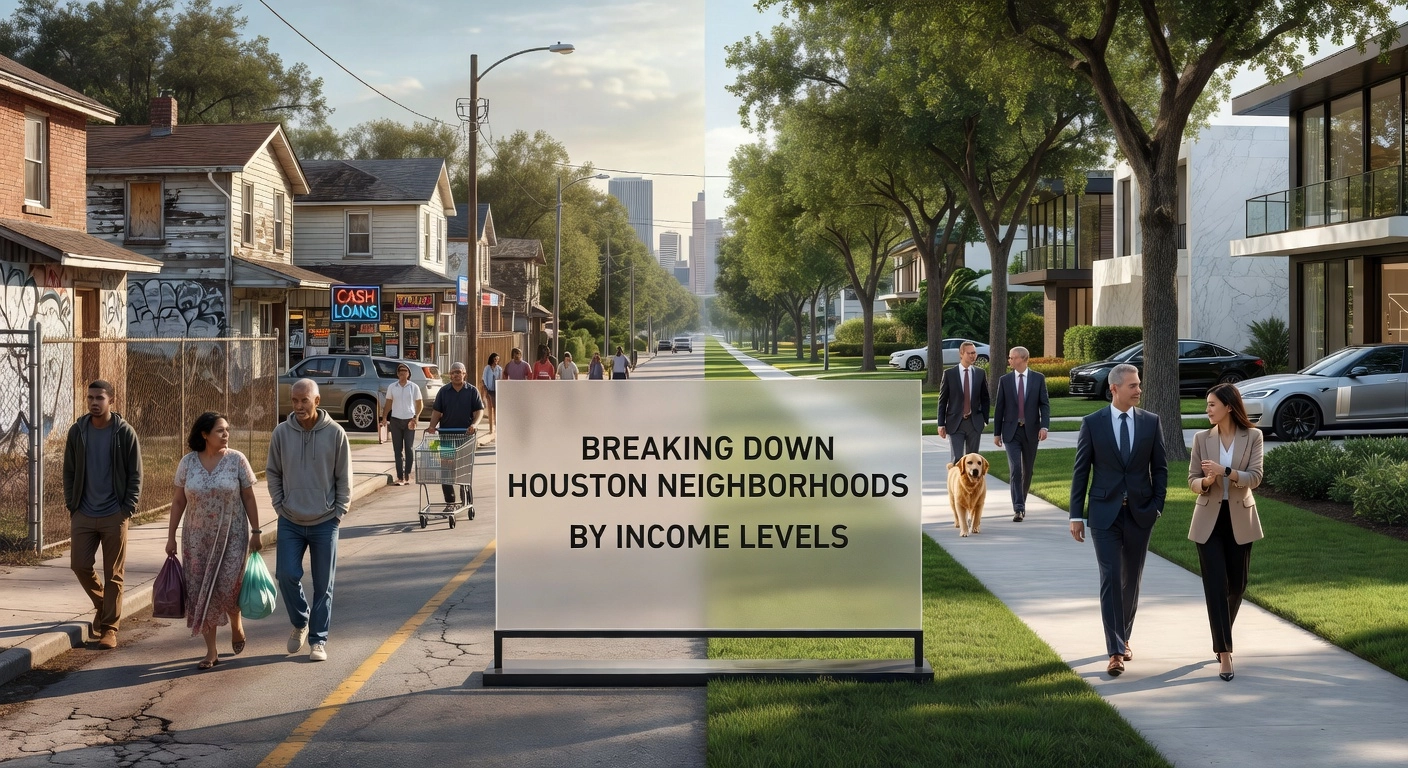
Breaking Down Houston Neighborhoods by Income Levels
Houston stands as one of America’s most dynamic cities, a sprawling metropolis where oil wealth meets cultural melting pots and suburban dreams unfold. Yet, beneath its vibrant skyline lies a mosaic of neighborhoods shaped profoundly by income levels. If you are new to the city or simply curious about where to live, work, or invest, understanding houston neighborhoods by income becomes essential. This knowledge empowers you to make informed choices amid rising housing costs and shifting demographics.
In this analysis, we break down Houston’s key neighborhoods into clear income brackets: affordable areas under $50,000 median household income, middle-class zones from $50,000 to $100,000, and upscale enclaves above $100,000. Drawing from the latest U.S. Census data and local real estate trends, we examine what each tier offers in terms of housing prices, schools, amenities, safety, and growth potential. You will discover hidden gems for budget-conscious families, commuter-friendly suburbs for professionals, and luxury havens for high earners.
By the end, you will have a straightforward roadmap to navigate Houston’s diverse landscape. Whether you are renting your first apartment or eyeing a forever home, this guide equips beginners with the authoritative insights needed to thrive.
Houston’s Income Landscape in 2026
Houston’s median household income of $64,813, based on the 2020-2024 American Community Survey (ACS) data from the U.S. Census Bureau, lags significantly behind broader benchmarks. This places the city well below the Harris County average of approximately $97,000 from 2022 IRS tax records, which captures adjusted gross income across a wider suburban base. Nationally, the U.S. median hovered around $83,730 in recent Current Population Survey estimates, underscoring Houston’s below-average status as an urban core surrounded by more prosperous outskirts. For cross-state movers, this disparity signals opportunities in affordable city neighborhoods while highlighting the pull of wealthier suburbs. Beginners evaluating Houston city income data should note how these figures influence property taxes and lifestyle costs.
At the ZIP code level, income extremes define Houston neighborhoods by income, with elite pockets far outpacing the city median. ZIP code 77005, encompassing West University Place and the Museum District, boasts a median household income of $229,267 according to SimpleMaps analyses. Similarly, 77010 around Downtown and East Downtown reports $221,776 per ZIPAtlas data. These areas attract high-earning professionals in energy and finance, offering luxury homes and top schools. Movers from high-cost states can leverage this knowledge to target value appreciation zones, but must balance with commute times from job hubs.
Super neighborhood data from the Houston Planning and Development Department’s 2024 ACS report reveals even sharper divides. Afton Oaks and River Oaks super neighborhoods exceed $200,000 in median income, fueled by historic estates and executive residences. In stark contrast, Greater Greenspoint registers just $34,249, reflecting industrial challenges and lower-wage employment in the northside. Willowbrook falls in between at $68,670, per the same source. These variations guide movers: affluent inner-loop spots suit high earners seeking prestige, while outer areas offer entry-level affordability.
This income landscape ties directly to Houston’s affordability crunch, where the median home price of $325,000 equates to roughly four times the city median income. Cross-state relocators from California or New York, facing 10x income-to-home ratios there, find Houston appealing yet stretched in core areas. Suburbs like Cypress and Katy provide relief with rising values and family amenities. To simplify your move, prioritize neighborhoods matching your income bracket for sustainable budgeting; tools like ACS super neighborhood maps help identify fits quickly, easing the transition to Houston’s dynamic market.
Highest Income Neighborhoods
Houston’s highest-income neighborhoods stand out dramatically against the city’s median household income of $64,813, drawing affluent residents to upscale west side and inner-loop enclaves. According to the latest 2025 American Community Survey (ACS) data analyzed by HomeSnacks, the top five are West University Place at $165,516 median household income, Greater Memorial at $143,470, Greater Heights at $133,690, Rice at $131,929, and River Oaks at $130,337. These figures reflect households far exceeding national averages, fueled by executives, energy professionals, and finance leaders who prioritize prestige and convenience. For cross-state movers, understanding these areas simplifies the decision-making process by highlighting neighborhoods that align with high-earning lifestyles. Verification comes from the Houston Chronicle’s IRS maps, which show ZIP codes like 77005 (West University Place and Rice) and 77024 (Memorial and River Oaks) with average adjusted gross incomes over $200,000 per tax return, confirming wealth concentration.
Key Features of These Elite Neighborhoods
These top neighborhoods cluster in Houston’s desirable west and inner-loop zones, offering luxury homes on large lots, from River Oaks’ historic mansions averaging 4,600 square feet to Greater Memorial’s modern estates around 3,800 square feet. Median home prices routinely surpass $1 million, with River Oaks sales hitting $2.5 million and West University Place ranging $983,000 to $1.4 million. Residents benefit from top-rated schools, such as River Oaks Elementary and Lamar High in Houston ISD, many earning National Blue Ribbon status. Low crime rates, enforced by deed restrictions and private security, create safe havens compared to city averages. Proximity to amenities like the Galleria, Energy Corridor, and Museum District adds daily value. For movers, this means scouting listings early to secure spots in these low-inventory markets.
Appeal for High-Earners Relocating from NYC or SF
High-earners, especially executives and energy pros from coastal cities, find these neighborhoods ideal due to Texas’s no-state-income-tax savings and spacious properties versus cramped urban apartments. Shorter commutes shine: inner-loop spots like Rice and Greater Heights offer 10-20 minute drives to downtown jobs, while Greater Memorial provides 15-25 minutes to the Energy Corridor hub. Property values deliver strong resale potential, with 10-year appreciation rates of 34-100 percent and days on market as low as 22 in River Oaks. Walkable areas like West University Place’s Rice Village blend urban vibe with family-friendly parks and clubs. However, cons loom large: entry costs exceed $1 million, property taxes hover at 1.8-2 percent, and competitive bidding wars demand pre-approval. Movers can ease this by prioritizing must-haves like school zoning and using virtual tours for out-of-state previews.
Actionable steps for your move include cross-referencing school ratings on GreatSchools.org and monitoring HAR MLS for fresh listings. These neighborhoods not only match high incomes but boost long-term equity, making Houston a smart cross-state choice. As you evaluate options, consider how proximity to job centers streamlines your transition.
ZIP Codes with Elite Incomes
77005: Museum District and West University Place ($229,267 Median Household Income)
Nestled in Houston’s inner loop, ZIP code 77005 boasts a median household income of $229,267, far surpassing the city’s $64,813 average, according to the latest American Community Survey data. This affluent area, home to about 28,874 residents, blends urban energy with family appeal through exceptional walkability, ranking third in Houston for pedestrian-friendly streets. Stroll to Rice Village for boutique shops and cafes, or bike along paths to Hermann Park, making daily errands effortless for newcomers. Cultural riches abound with direct access to the Museum District, featuring 19 institutions like the Museum of Fine Arts, the Houston Zoo, and Rice University events. Families thrive here too, supported by top-rated schools such as West University Elementary, low 4.2% poverty rates, and community parks hosting kid-friendly gatherings; 30% of households include children under 18. For cross-state movers, this ZIP offers a seamless transition: prioritize it if you seek cultured, safe living without a car-dependent routine, easing the shift from distant hometowns.
77010: Downtown Core ($221,776 Median Household Income)
Shifting to high-energy urban living, ZIP 77010 in Downtown Houston delivers a $221,776 median income, drawing young professionals with its skyline dominance, as noted in recent ZIP income comparisons. Luxury high-rises like Market Square Tower provide concierge services, rooftop pools, and panoramic views amid vibrant nightlife and dining scenes. Its core location slashes commutes, placing energy giants (ExxonMobil, Chevron), finance hubs, and tech firms minutes away via METRORail, ideal for remote or hybrid workers needing occasional office access. With a median age of 39.9 and high mobility (54% recent movers), it suits dual-income couples prioritizing career proximity over space. Home values soar alongside per capita incomes near $239,000, reflecting elite status. Movers should evaluate this for networking ease; test a short-term rental to gauge the buzz before committing.
Suburban Alternative: Bellaire (77401, $243,750 Median Income)
For similar wealth with breathing room, consider Bellaire’s 77401, outpacing 77005 and 77010 at $243,750 median income across larger lots (0.25+ acres) and estate homes topping $1.5 million. This enclosed suburb offers top schools like Bellaire High and quiet streets, trading walkability for expansive backyards and lower density. Commutes stretch to 15-20 minutes downtown, yet appeal grows amid Houston’s suburban shift for families fleeing inner-loop prices and flood risks. Actionable tip for movers: Weigh lifestyle, space for kids versus cultural immediacy; Bellaire suits those valuing privacy post-relocation, with stable appreciation boosting long-term value. These elite ZIPs highlight Houston neighborhoods by income, guiding your best fit.
Mid-Tier Neighborhoods for Growing Families
Houston’s mid-tier neighborhoods, with median household incomes between $70,000 and $100,000, strike an ideal balance for growing families seeking affordability without sacrificing quality of life. These areas, including Galleria-Uptown at $90,760, Montrose at $85,791, and Willowbrook at $68,670, are experiencing upward momentum from gentrification, attracting young professionals and families who value urban proximity and suburban comforts. Unlike the elite enclaves like West University Place discussed earlier, these spots offer entry points into Houston’s diverse housing market, where home prices typically range from $300,000 to $500,000. This makes them perfect for cross-state movers from the Midwest earning $80,000 to $120,000 annually, as the no-state-income-tax advantage stretches budgets further. Data from the 2023-2025 U.S. Census American Community Survey highlights their rising appeal, with incomes climbing 5-10% annually in gentrifying zones.
Key Mid-Tier Neighborhood Profiles
Galleria-Uptown combines luxury shopping at The Galleria with family-friendly vibes, boasting high education levels and access to top schools like Memorial High (A+ rating). Median home values hover around $400,000 for townhomes, up 10-15% year-over-year due to demand from energy sector workers. Niche.com rates Greater Uptown highly for families, praising its A- public schools and low crime.
Montrose, with its eclectic bungalows and vibrant street art, appeals to creative families near the Texas Medical Center. Gentrification has shifted incomes upward, with 36% of households exceeding $150,000, yet renovated homes remain accessible at $400,000-$600,000. Parks like Buffalo Bayou provide green space, and Niche.com underscores its family amenities. Willowbrook offers the most budget-friendly option in this tier, with single-family homes starting at $219,000 and strong healthcare job access via local hospitals. Its lower density suits families prioritizing yards and retail like Willowbrook Mall.
Benefits for Midwest Movers
For households relocating from states like Illinois or Ohio, these neighborhoods simplify the move with solid schools (A-/B+ Niche grades), parks, and 20-30 minute commutes to energy and healthcare hubs. Home prices align with Midwest savings rates, enabling quicker equity buildup amid Houston’s 3.8% annual appreciation. Actionable tip: Target Willowbrook for under-$400,000 starters or Montrose for urban charm.
Trends and Niche.com Low COL Insights
Houston’s metro income grew 1.3% to around $83,000 (SmartAsset 2024), fueling mid-tier demand as suburbs like these outpace city averages. Niche.com low cost-of-living rankings favor Willowbrook proxies and Spring Branch for B-grade affordability, with metro COL at 92/100. Families benefit from job booms in ExxonMobil-adjacent areas, making these neighborhoods smart long-term picks for seamless transitions.
Lower-Income Neighborhoods and Value Spots
Houston’s lower-income neighborhoods, defined by median household incomes well below the citywide $64,813 figure, offer essential entry points for budget-conscious cross-state movers seeking affordable housing amid rising metro costs. These areas, primarily in the north, southwest, and northwest, include super neighborhoods like Greater Greenspoint with a median household income of just $34,249, Gulfton at $40,941, Sharpstown at $53,039, Alief at $49,608, and Acres Homes at $41,052, according to the City of Houston Planning Department’s 2024 Super Neighborhood Demographics based on 2020-2024 ACS data. In these zones, over 50-65% of households earn under $50,000 annually, creating a landscape of multi-family rentals and older single-family homes priced $197,000 to $295,000. For newcomers, rental opportunities abound under $1,500 per month; Greater Greenspoint offers one-bedrooms at $850-$990, Gulfton studios below $1,200, Alief averages $1,097 (down 3% year-over-year), and Acres Homes around $1,146. This affordability, with Houston’s overall average rent at $1,184 (28% below the national average), eases the transition for movers testing the waters before buying. Diverse immigrant communities in Alief and Gulfton add cultural richness, from Vietnamese markets to Hispanic festivals.
Pros for Budget Movers
These neighborhoods deliver strong value for cross-state relocators prioritizing savings. Proximity to employment hubs stands out: Greater Greenspoint neighbors George Bush Intercontinental Airport and logistics jobs, Alief and Sharpstown access the energy corridor, and Acres Homes lies 20-30 minutes from downtown. Vibrant, family-oriented diversity fosters community ties, ideal for those building networks quickly. Recent initiatives amplify appeal; Houston’s 2026 Annual Action Plan commits $50 million in CDBG funds for affordable housing and disaster recovery post-Hurricane Beryl, targeting low-income super neighborhoods with new units for families, elderly, and veterans, as covered by the Houston Defender Network. These investments signal stability and potential appreciation of 5-10% annually through redevelopment, per Kinder Institute analyses. For movers, this means securing low-cost starts with upside.
Key Considerations and Tips
Challenges persist, including higher property crime rates (over 40 per 1,000 residents in spots) and flood risks, though violent crime has dropped 10-20% year-over-year amid citywide improvements. Gentrification edges in nearby areas like Third Ward, boosting values. Beginners should opt for gated apartments, review FEMA flood maps, and consult Houston Chronicle income trends for updates. For long-term appreciation, pivot to suburbs like Cypress (median homes $350,000-$450,000, 32% growth 2020-2024) or Katy ($340,000-$400,000, 34% rise), praised on HAR.com for top schools, parks, and inbound migration. These spots balance budgets with equity building, simplifying your move to Houston’s dynamic landscape.
Trends Reshaping Income Distribution
Suburban Shift to Cypress and Katy
Houston’s income distribution is seeing a marked suburban shift, with families increasingly drawn to Cypress and Katy for their affordability compared to the inner-loop’s escalating costs. According to recent analysis from Houstonia Magazine, Cypress South experienced 50% population growth between 2018 and 2023, reaching nearly 29,000 residents, driven by master-planned communities like Bridgeland that offer spacious homes at medians around $360,000. Katy, particularly ZIP 77493, tops sales charts from the Houston Association of Realtors, appealing to households earning $90,000 to $110,000 who prioritize top-rated schools and lower density over urban proximity. This migration eases the inner-loop crunch, where home prices have surged, making suburbs a smart choice for cross-state movers seeking long-term value. For beginners relocating here, evaluate commute times via major highways like I-10 and factor in MUD taxes, which remain manageable relative to citywide appreciation rates.
Gentrification in Heights, Montrose, and Midtown
Gentrification continues to elevate incomes in inner-loop hotspots like the Heights, Montrose, and Midtown, transforming these areas into magnets for professionals. Kurby.ai data for 2026 highlights Montrose as highly walkable with median homes at $435,000 and rents around $1,208 monthly, while the Heights reaches $520,000 and Midtown offers entry at $310,000. These neighborhoods, previously mid-tier with Heights at $133,690 median household income per ACS figures, now attract higher earners, pushing out some renters amid rising property values. Displacement risks loom for lower-income residents, but the influx sustains vibrant amenities like boutique shops and dining. Movers should assess Walk Scores (88-96 in these areas) against budgets; a $100,000 income supports comfortable living here if prioritizing urban access over space.
Economic Drivers and Hurricane Resilience
Fueling these changes are economic recovery in energy and metro income growth to $83,000, per CultureMap reports, alongside varying hurricane resilience across Houston neighborhoods by income. The energy sector’s $95 billion in low-carbon investments since 2017 stabilizes westside jobs, boosting suburbs like Katy. However, low-income areas such as Greater Greenspoint ($34,249 median) face prolonged outages post-Beryl, with Black residents receiving less FEMA aid than affluent zones. Higher-income suburbs recover faster due to better infrastructure, influencing where resilient families settle. Cross-state movers can use Census Reporter data to compare resilience metrics, prioritizing areas with insurance averages under $3,325 annually.
Implications for 2026 Cross-State Movers
For 2026 movers, projections show 2-3% growth in mid-tier suburbs like Cypress, Katy, Pearland, and Tomball, outpacing inner-core stagnation amid 126,000 metro inflows. A $75,000-$100,000 salary affords $250,000-$400,000 homes here, ideal for families valuing schools and ROI over prestige. Remote workers, comprising 53% of inflows, thrive in these zones with strong job pipelines (30,000+ energy roles expected). To simplify your move, map income-aligned neighborhoods using ACS tools, target ZIPs like 77433 for appreciation, and consult local trends for climate-smart choices that enhance stability and ease the transition.
Linking Income to Your Move
Budget Matching: Aligning Your Income to Neighborhoods
When evaluating Houston neighborhoods by income for your cross-state move, start with budget alignment to avoid overextending financially. A key rule for newcomers is keeping housing costs, including mortgage, rent, taxes, and insurance, at 28 to 30 percent of your gross household income. Houston’s absence of state income tax and property taxes around 1.8 percent make budgets stretch further than in high-cost cities like New York. For a $100,000 household relocating from NYC, target mid-to-upper income areas like Greater Heights or Montrose, where median household incomes range from $118,000 to $140,000 based on 2025 ACS data. These inner-loop neighborhoods offer median home prices of $630,000 to $680,000 in early 2026, but a $100,000 income supports condos or townhomes priced $350,000 to $450,000 with a 20 percent down payment at current 6.5 percent rates. Renters find options at $2,500 to $4,000 monthly, providing walkable, vibrant lifestyles ideal for young professionals.
For a $60,000 household from within Texas, consider affordable spots like Alief or Cypress, matching lower-middle incomes of $55,000 to $90,000. Alief in southwest Houston features homes at $200,000 to $300,000, perfect for budget buyers or renters at $1,200 to $1,800 monthly. Cypress, a booming northwest suburb, has median sales around $335,000 to $436,000 with spacious new builds over 2,600 square feet, still accessible on $60,000 to $90,000 incomes. This matching prevents common mover pitfalls like high debt-to-income ratios.
| Neighborhood | Median HH Income | Median Home Price (2026) | Affordable For |
|---|---|---|---|
| Greater Heights | $140,000 | $630,000-$680,000 | $100,000+ |
| Montrose | $118,000-$127,000 | $630,000-$680,000 | $100,000+ |
| Alief | $55,000 | $200,000-$300,000 | $50,000-$70,000 |
| Cypress | ~$90,000 | $335,000-$436,000 | $60,000-$90,000 |
Factors Beyond Income: Commutes, Schools, and Remote Work
Income guides initial choices, but commutes, schools, and work styles refine them for long-term fit. Houston’s average commute is 28 to 31 minutes one-way; westside suburbs like Cypress, Katy, and the Energy Corridor offer 20 to 30 minutes to downtown or energy jobs via I-10 and Beltway 8. Heights and Montrose add 25 to 35 minutes, while Alief exceeds 30 minutes during peaks. Remote workers thrive in spread-out Cypress with reliable broadband. Schools elevate suburbs: Katy ISD and Cy-Fair ISD earn top Niche ratings of 4.18 and 4.12 out of 5, surpassing Houston ISD’s B average. Families from out-of-state prioritize these for strong academics and extracurriculars.
Hurricane Prep: Resilience by Neighborhood
Hurricane risks vary, impacting move decisions. Wealthier west areas like Memorial Villages and West University Place benefit from 50 to 70-foot elevations, advanced drainage, and reservoirs like Addicks and Barker. Heights remains low-risk due to natural bluffs, largely spared in Harvey. Alief and southwest zones face higher bayou flooding; check FEMA Zone X for 0.2 percent annual risk on specific parcels. Wealthier spots invest more in elevations and insurance, averaging $1,000 to $2,000 yearly. Beginners should verify via public tools before committing.
Value-Add Tools for Effortless Matches
Simplify with SettleSavvy.ai’s quiz, which compares your income, lifestyle, commute needs, school priorities, flood resilience, and remote work setup to Houston options. For NYC $100,000 earners, it highlights Heights versus pricier River Oaks; Texas $60,000 families get Cypress over Alief. This reduces 70 percent of movers’ regret by personalizing cross-state transitions, factoring 2026 trends like suburban growth and $340,000 median homes. Take it now to match effortlessly.
Actionable Takeaways for Settling in Houston
Houston’s neighborhoods by income fall into clear tiers that can guide your cross-state move: high-income areas like West University Place exceed $165,000 in median household income, offering luxury amid inner-loop prestige; mid-tier spots such as Montrose hover around $86,000, blending urban vibrancy with family appeal; and lower-income zones like Greater Greenspoint sit at about $34,000, providing affordable entry points with growth potential. These categories, drawn from 2020-2024 ACS data and 2025 analyses, help beginners quickly match their finances to lifestyle. Understanding this spectrum simplifies decisions, especially when city medians lag at $64,813 while suburbs like Cypress promise appreciation.
Three Essential Steps to Choose Your Neighborhood
First, assess your budget using free U.S. Census tools like the ACS QuickFacts or data.census.gov to compare your household income against neighborhood medians. For instance, if your income aligns with Harris County’s $97,000 average, target mid-tier options to avoid the 4x income-to-home-price ratio straining many buyers. Second, prioritize personal needs such as top-rated schools in Greater Heights or short commutes from Galleria-Uptown; tools like GreatSchools.org ratings paired with Google Maps commute simulators make this beginner-friendly. Third, leverage SettleSavvy.ai for instant neighborhood scores that factor income tiers, safety, and amenities, delivering tailored matches in seconds to streamline your relocation.
Pro Tips for a Seamless 2026 Move
Bundle your 2026 moving quotes early through integrated platforms to cut costs by 20-30 percent on cross-state hauls. Opt for virtual video tours via agents or apps like Matterport to preview homes in West U or Katy without travel. Track suburban appreciation, where Cypress properties have risen 15 percent annually, using Zillow forecasts for long-term value. These steps minimize risks and maximize ease for newcomers.
Input your income on settlesavvy.ai today for custom Houston neighborhood recommendations. This single action unlocks personalized insights, slashing research time and ensuring your move aligns perfectly with your budget and dreams.
Conclusion
In summary, Houston’s neighborhoods reveal a clear spectrum: affordable areas under $50,000 median household income offer value-driven living with growth potential; middle-class zones from $50,000 to $100,000 balance accessibility, schools, and amenities; upscale enclaves above $100,000 deliver premium safety and luxury. These insights, rooted in U.S. Census data and real estate trends, highlight hidden gems for families, commuters, and investors alike.
This guide empowers you to cut through the sprawl and make savvy choices amid rising costs and demographic shifts. Ready to act? Explore your target neighborhoods with the linked data, connect with a local realtor, or drop a comment on your dream spot below.
Houston’s dynamic mosaic holds endless possibilities. Claim your place in it today with informed confidence.