Best Places to Live in Washington State for Different Buyer Priorities
The job is in the Pacific Northwest, the remote setup finally freed you to move, or orders are sending you to Joint Base Lewis-McChord. Either way, the hard part is figuring out where in Washington State you will actually live.
Most “best of” lists rank cities by a single score, which does not help much if you care about schools, weather, or, honestly, what you can afford.
SettleSavvy turns that research into a free, personalized neighborhood map, layering crime, schools, demographics, and commute data into one clear picture.
This guide breaks down how to narrow your search by region and budget, comparing Seattle-area favorites with mid-size and smaller cities and pointing out the data to check before you buy. Every pick ties back to what buyers actually care about, so you can move forward with real confidence.
How to Narrow Washington Down Before You Compare Cities
The quickest way to shrink your search is to decide which side of the Cascades suits you. That one choice filters out a lot: climate, commute patterns, and price ranges.
Choose Between Western Washington and Eastern Washington
Western Washington, anchored by the Puget Sound metro, gets 37 to 50 inches of rain a year. It is milder in winter, greener, and close to the coast, with tech jobs, port industries, and major hospitals nearby.
Eastern Washington, stretching from the Columbia River basin to Spokane, gets more than 200 sunny days a year, with warm dry summers and real winter snow. It offers bigger lots, shorter commutes, and a much lower cost of living. Seattle-Tacoma International covers the west, while Spokane International handles the east.
Set Your Budget, Commute, and Climate Priorities
Home values in Washington swing wildly. Sammamish runs near $1.3 million, while Wenatchee sits around $394,750 and Walla Walla about $363,539. Your budget alone can rule out entire areas.
Before you dive into listings, lock in three numbers:
- Maximum monthly housing cost you can handle (mortgage, taxes, insurance)
- Longest commute you will tolerate in minutes
- Number of overcast days you are willing to accept (western Washington averages over 220)
Those three filters keep you from falling for a neighborhood that looks perfect online but drains you in real life.
Use Neighborhood Data Instead of Generic Rankings
A city’s ranking tells you little about the street where your kids will wait for the bus. Crime rates change block by block, even inside one ZIP code, and school ratings depend on attendance zones, not city limits.
Dig into neighborhood-level data: property crime versus violent crime, school ratings, student-to-teacher ratios, and walkability. That is what separates a confident buy from a shot in the dark.
Seattle Area Picks for Jobs, Transit, and Urban Convenience
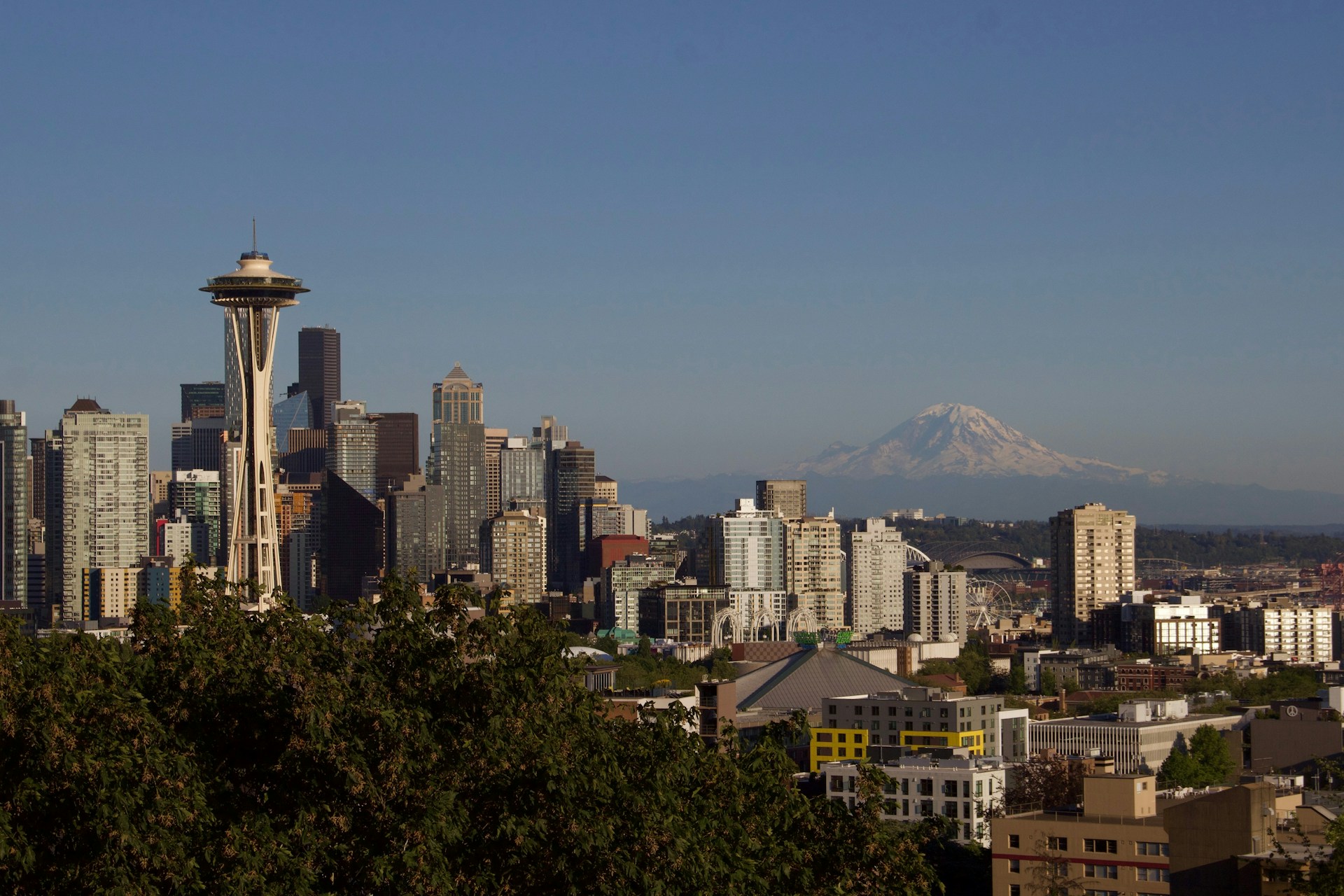
If your job or industry keeps you near the Puget Sound, the Seattle metro offers the best mix of employer access, public transit, and culture in Washington. Workers here earn Seattle-area wages averaging $44.13 an hour, well above the national average.
Living in Seattle: Who It Fits and What to Watch
Seattle suits buyers who want walkability, transit, and a short hop to work. The population is about 794,000, median household income hovers around $130,619, and median home values sit near $920,614, so a solid dual income or a high-paying tech, healthcare, or engineering job really helps.
Seattle neighborhoods run the gamut. Ballard feels family-friendly with strong elementary schools, Capitol Hill draws younger professionals wanting nightlife and density, and Rainier Valley stands out for diversity and lower prices, though some blocks carry higher property crime. Always compare at the neighborhood level before deciding.
Seattle’s average commute is 23 minutes, but that hides a lot. A bus from the University District to downtown might take 15 minutes, while driving from West Seattle at rush hour can easily top 45.
Bellevue, Redmond, and Kirkland for Eastside Access
The Eastside suburbs across Lake Washington anchor the state’s tech economy. Redmond, home to big tech campuses, has a median household income of $168,278 and a 19-minute average commute. Bellevue matches that commute time, with a median home value near $1,304,230.
Kirkland rounds out the trio, with a median home value around $1,068,154, waterfront access along Lake Washington, and a 21-minute average commute, a bit shorter than many Seattle neighborhoods.
Here is what separates these Eastside cities:
- School quality: All three sit in top-rated districts, but ratings shift by neighborhood.
- Crime: Downtown Bellevue sees more property crime than residential Redmond. Block-level data matters.
- Commute flexibility: Redmond and Kirkland benefit from new light rail; Bellevue’s Spring District is already transit-friendly.
Sammamish, Mercer Island, and Bainbridge Island for Higher-Budget Buyers
Sammamish tops the top-ranked Washington cities list for a reason: a median household income of $247,657, about 65,430 residents, a suburban family focus, and top schools.
Mercer Island, ringed by Lake Washington, feels exclusive and offers a short commute to Seattle or Bellevue via I-90. Bainbridge Island requires a ferry but gives you a slower pace, arts culture, and much lower density.
The trade-off is commute time. Sammamish averages 29 minutes, and Bainbridge adds a 35-minute ferry. If that works for you, you get great schools, low crime, and a real sense of community.
Mid-Size Cities That Balance Cost, Access, and Daily Life
Tacoma, Everett, Olympia, and Spokane each offer a lower entry price than Seattle while keeping jobs, schools, and healthcare within reach. The question shifts from “can I afford it?” to “what am I willing to drive?”
Tacoma and Everett for Puget Sound Value
Tacoma gives you waterfront access at about a quarter of Seattle’s median home value. The Tacoma neighborhood data show a city of roughly 228,000, the third-largest in Washington, with diverse neighborhoods, strong hospitals, and a growing arts scene.
School ratings in Tacoma change sharply by neighborhood. The Stadium District and North End usually rate higher, while some south-side areas score lower and carry higher property crime, so block-level crime and school data really matter here.
Everett, north of Seattle, benefits from Boeing and Naval Station Everett. Home prices run lower than Seattle’s, and the drive to downtown Seattle averages 35 to 45 minutes by car, which light-rail expansion should improve in the next few years.
Olympia for Government Jobs and a Smaller Capital-City Feel
Olympia, the state capital, anchors a metro of about 290,000. State government drives the job market, which means steady if not fast growth, with home values well below Seattle’s and a quieter pace.
If you want nature, Olympia delivers, with the Olympic Mountains visible on clear days and Puget Sound inlets close by. Families should check school ratings in the Olympia, Tumwater, and North Thurston districts, since each serves different neighborhoods and student populations.
Spokane for Affordability, Sun, and Eastern Washington Access
Spokane stretches your dollar the furthest among Washington’s major cities. Spokane Valley’s median home value sits near $393,915, median household income is about $74,669, the average commute is just 19 minutes, and you get more than 200 sunny days a year.
Spokane’s job market leans on healthcare, education, and a growing tech scene. Check neighborhood-level violent crime data, because citywide numbers hide big differences between peaceful South Hill and higher-crime spots downtown.
- South Hill: higher home values, strong schools, lower crime.
- North Spokane: more affordable, newer homes, longer commute to downtown.
- Spokane Valley: suburban, good retail, moderate schools.
Smaller Washington Communities With Distinct Lifestyle Trade-Offs
If you care about outdoor access, fewer people, or a tight-knit vibe, smaller Washington cities offer things big metros cannot. The downside is fewer jobs, longer trips to airports, and smaller school districts.
Bellingham and Port Angeles for Coastal and Outdoor Access
Bellingham, home to Western Washington University, sits 90 miles north of Seattle and 20 miles from Canada. It has a college-town feel, plus mountain biking, skiing at Mount Baker, and San Juan Islands ferries. Median home prices fall below Seattle’s but run higher than eastern Washington’s.
The Bellingham area has jobs in education, healthcare, and a growing remote-work scene. Schools range from strong public options to Montessori programs, so compare boundaries closely, since ratings shift east and west of I-5.
Port Angeles sits on the northern Olympic Peninsula, facing the Strait of Juan de Fuca, with unmatched access to hiking, fishing, and national park land. The catch is isolation: major hospitals are limited, and the drive to Sea-Tac Airport takes about three hours.
Wenatchee, Richland, and Walla Walla for Sun and Space
These three eastern Washington cities offer warm summers, affordable homes, and short commutes.
- Wenatchee: median home value near $394,750, a 12-minute average commute, and a population around 33,000. The economy runs on agriculture, healthcare, and outdoor tourism.
- Richland: part of the Tri-Cities, Richland benefits from PNNL and Hanford jobs, with STEM careers a standout. Kennewick, next door, has a median home value near $404,489.
- Walla Walla: a wine-country town of about 33,700, with a median home value around $363,539 and a 10-minute average commute. School districts are smaller but often have lower student-to-teacher ratios.
If you work remotely or are retiring, these towns offer real value. If you need a major airport, expect a two- to three-hour drive to Seattle or Spokane.
Port Townsend, Leavenworth, Pullman, and the San Juan Islands for Niche Lifestyles
Port Townsend pulls in artists, retirees, and anyone who loves history, and its Victorian seaport downtown feels genuinely unique. Housing options stay limited, and for big-box stores you will drive to Sequim, about half an hour away.
Leavenworth sits tucked in the Cascades, dressed up like a Bavarian village. Tourism keeps the town lively but also spikes traffic with the seasons, and steady work outside hospitality or remote gigs is hard to find.
Pullman, home to Washington State University, attracts buyers who want an affordable college-town feel in the rolling Palouse hills. Most jobs tie back to the university, and Spokane’s airport is the closest, roughly 80 miles up the road.
The San Juan Islands make you choose: jaw-dropping scenery and deep quiet, but you depend on ferries for everything. Groceries, healthcare, and schools all get shaped by the realities of island life.
What to Compare Inside Each City Before You Buy
Picking a city is only half the story. The specific neighborhood shapes your school choices, safety, and commute far more than the city name on your mail.
School Ratings, Crime Trends, and Demographics
If you have kids, or are planning to, start with schools. School review tools break things down by test scores, equity, and student growth. In Tacoma, you could find a neighborhood school rated 8 out of 10 a couple of miles from one rated 4 out of 10. School boundaries, not city lines, decide where your child goes.
Next, check crime data. Look at both violent crime and property crime, since they tell different stories. A neighborhood might have low violent crime but frequent car break-ins, which feels different from the opposite. Always look at trends over several years to see if things are getting better or worse.
Demographics round things out. Median age, household size, and income levels hint at what your neighbors might be like. If community fit matters to you, and it usually does, this information is worth a look.
Commute Patterns, Remote Work Hubs, and Daily Drive Times
Average city commute times can hide big differences. Someone in downtown Redmond might reach a tech campus in 15 minutes, but from south Redmond it could take twice as long on I-405.
For remote workers, the “commute” becomes about errands, school runs, and weekend adventures. Try timing your drives to:
- Grocery stores and healthcare in 10 minutes or less
- Your child’s school in under 15 minutes
- Airports or major highways in 30 to 45 minutes
- Outdoor spots that fit your lifestyle
Do not ignore walkability and transit. Walkability data shows Seattle, Tacoma, and Lynnwood at the top, while many suburbs and rural areas fall below 30.
Housing Costs, Inventory, and Long-Term Fit
Median home price is just the starting line. Compare it with property taxes, HOA dues, and insurance in each neighborhood. A $400,000 home in Spokane might cost less per year than a $380,000 home in a flood-prone Puget Sound spot with pricier insurance.
Inventory tells you a lot, too. Neighborhoods with very few listings force bidding wars and leave little room to negotiate on inspections or repairs. Check how many homes are actually for sale and how long they sit. Homes that sell in under 10 days feel very different from ones that sit for 45.
Think about whether the neighborhood will still work for you in five or seven years. Are new developments planned? Is the school district growing or shrinking? Are property values rising or dropping? These questions move you past “good enough for now” to something you will feel sure about.
Choose the Place That Fits Your Life
The best places to live in Washington State depend on what you care about most. Maybe you put schools first, or maybe you focus on commute, cost, climate, or community. How you rank those factors shapes your answer.
Match Your Priorities to a Shortlist of Washington Locations
Write down your top three non-negotiable factors, then look only at cities and neighborhoods that check all three boxes.
- Top schools, low crime, higher budget: Sammamish, Mercer Island, Bellevue, South Hill in Spokane
- Affordability, sun, short commute: Spokane Valley, Wenatchee, Richland, Walla Walla
- Urban access, transit, career growth: Seattle neighborhoods, Redmond, Kirkland
- Outdoor lifestyle, slower pace: Bellingham, Port Angeles, Leavenworth, San Juan Islands
- Government or military proximity, value: Olympia, Tacoma, Lakewood
Every city on your list needs a neighborhood-level look before you visit or make an offer. City averages hide the real differences you will feel block by block.
When to Build a Personalized Map Before You Commit
If you are comparing more than two neighborhoods or moving in from out of state, a data-driven map helps you see trade-offs side by side. You can explore Washington neighborhoods by layering in school data, crime trends, demographics, and commute times, all in one place.
SettleSavvy does not cost anything. Map your Washington shortlist and see which areas really fit your priorities. Want someone to walk you through it? Get a free data walkthrough and gain some clarity before you take the leap.
Frequently Asked Questions
If Schools and Safety Come First, Which Washington Cities Should Families Look At?
Sammamish, Bellevue, and Redmond usually come out on top when you look at school ratings, low violent crime, and easy park access. South Hill near Puyallup and parts of Kirkland also do well. Always double-check using school boundaries, not just city-wide numbers.
Where Can Young Adults Find Strong Job Growth, Walkable Neighborhoods, and Nightlife Without Extreme Rent?
Tacoma’s Stadium District and parts of Everett mix walkability, nightlife, and rents that are a lot easier than Seattle’s. In Seattle, Columbia City and Beacon Hill offer lighter rent compared to Capitol Hill or Ballard, and both score above 70 for walkability.
Which Areas in Washington Stay Safest Based on Recent Crime Data, Not Just Reputation?
Sammamish, Mercer Island, and Bainbridge Island report some of the lowest violent and property crime rates in the state. In eastern Washington, South Hill in Spokane and parts of Richland trend safe, too. Always look at three-to-five-year crime trends, not just one year.
Where Can Buyers Get the Most Home for Their Budget When You Compare Prices, Taxes, and Commutes?
Walla Walla (median home value $363,539, 10-minute average commute) and Spokane Valley ($393,915, 19-minute commute) give you a strong price-to-commute balance. Wenatchee is also a good value at $394,750 with a 12-minute commute, though most jobs there are in healthcare or agriculture.
How Much Income Do I Need to Live Comfortably in Different Washington Metros?
In the Seattle area, households spend about $109,460 per year, so an income above $130,000 gives you some breathing room. In Spokane or the Tri-Cities, a household income around $75,000 to $85,000 usually covers housing, childcare, and transportation without too much stress. Adjust for whether you need one or two cars, and whether childcare is full-time or part-time.
Which Parts of Washington Are Best to Avoid for Fewer Wildfire Smoke Days, Lower Flood Risk, and Safer Winter Driving?
Eastern Washington and the eastern Cascades get the most wildfire smoke from July through September. Flooding mostly hits low-lying Puget Sound river valleys, like parts of the Skagit and Snohomish river floodplains. For safer winter driving, stick with lower-elevation cities in western Washington such as Olympia, Tacoma, or Bellingham, where snow is rare, and you avoid daily mountain-pass crossings.